Are You Using Mock Tests for NEET PG the Right Way? A Complete Strategy Guide
Reflex · 26 Apr 2026 · 11 min read
On this page
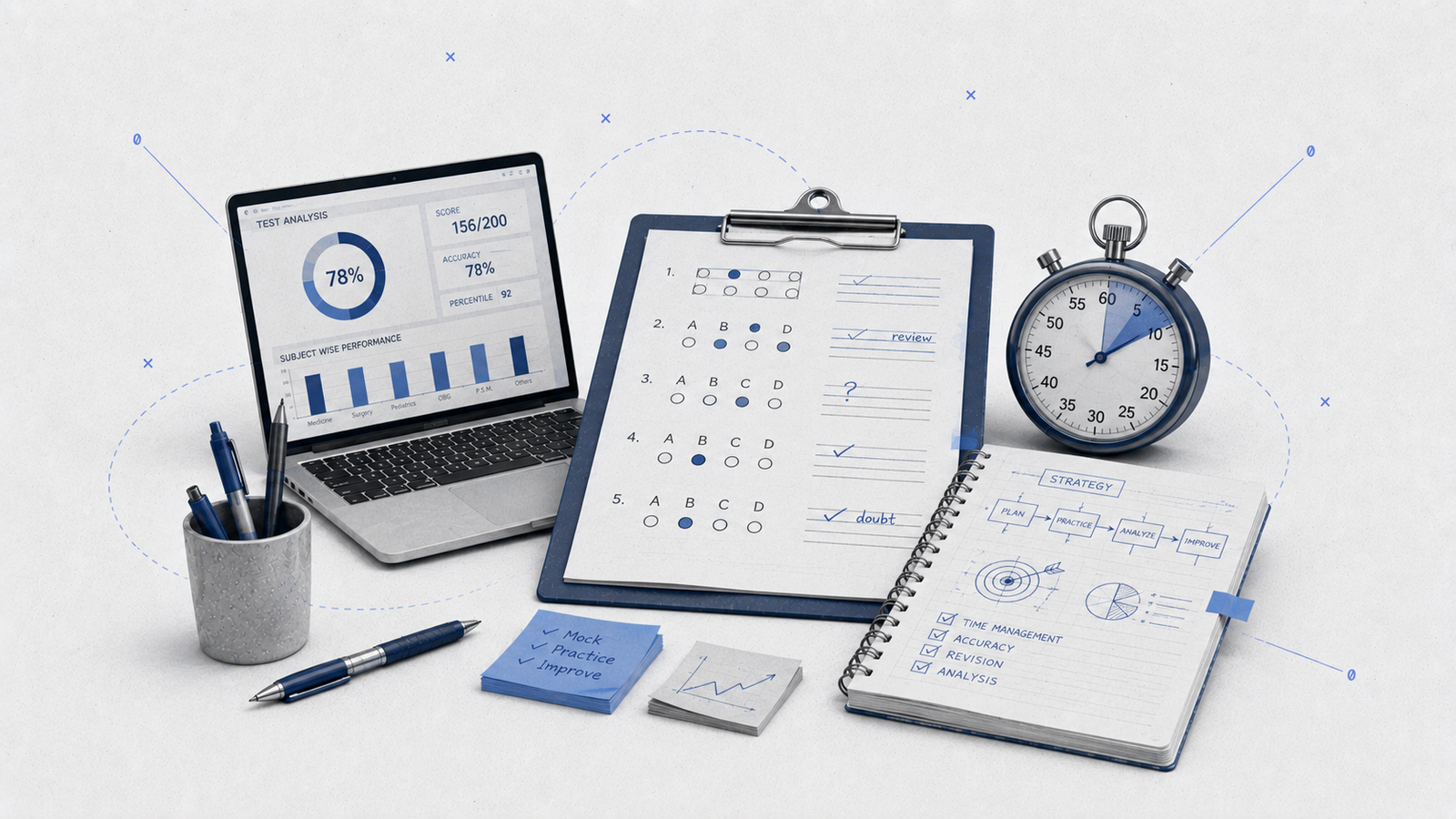
Preparing for NEET PG is not just about studying — it’s about practicing the right way.
Mock tests are one of the most powerful tools in your preparation journey. They don’t just measure your knowledge; they shape your performance, improve your timing, and strengthen your confidence.
Used correctly, mock tests can become your biggest advantage. Used incorrectly, they can become a routine task without real improvement.
This guide explains how to use mock tests effectively so that every test you take moves you closer to your dream rank.
Key Takeaways
- Mock tests build exam stamina, time management, strategic thinking, and self-awareness about strengths and weaknesses — not just knowledge.
- Start mock testing early, even before finishing the syllabus; they are learning tools, not final evaluations.
- Analysis matters more than frequency: classify every question into one of four categories (confident correct, careless mistake, didn't know, guessed correctly) and focus revision on categories two and three.
- Revise weak areas within 24–48 hours of identifying them for better retention.
- Aim for 15–20 full-length mock tests overall, moving from one every two weeks early on to weekly full-length mocks in the final two months.
Why Mock Tests for NEET PG Matter
The NEET PG exam tests more than knowledge. It evaluates speed, accuracy, decision-making, and emotional control. Mock tests help you build all these skills simultaneously.
Benefits of Mock Tests
- Improve exam stamina for long test duration
- Strengthen time management skills
- Develop strategic thinking
- Recognize question patterns
- Build self-awareness about strengths and weaknesses
Mock tests provide a realistic preview of exam performance.
The Common Mistake — Taking Tests Without Strategy
Many aspirants take mock tests regularly but fail to analyze them properly. Simply attempting tests without reviewing mistakes limits improvement. Students who spend time analyzing their tests often improve faster than those who only focus on scores — the real value of a mock test lies in what you learn after completing it.
The Right Way to Use Mock Tests for NEET PG
1. Start Early — Don’t Wait for Syllabus Completion
Waiting to finish the entire syllabus before attempting mock tests is a common mistake. Start early in your preparation, even if your syllabus is incomplete.
Why Early Mock Testing Helps
- Builds familiarity with exam format
- Identifies weak areas sooner
- Improves confidence gradually
- Develops exam stamina
Mock tests are learning tools, not final evaluations.
2. Create a Consistent Mock Test Routine
Consistency is more important than frequency.
Suggested Routine
- Full-length mock every 15 days initially
- Weekly mock tests in the final two months
- Subject-wise tests for weak subjects
The goal is steady improvement over time.
3. Simulate Real Exam Conditions
Mock tests should be taken under realistic exam conditions.
Best Practices
- Sit in a quiet environment
- Use a timer
- Avoid interruptions
- Complete the test within the official duration
Training your brain under realistic pressure improves performance on exam day.
4. Analyse Your Mock Tests Thoroughly
Analysis is the most important part of mock testing. Spend sufficient time reviewing each test after completion.
Classify Questions into Four Categories
- Correct answer with full confidence
- Knew the concept but made a mistake
- Did not know the answer
- Guessed correctly
Focus your revision on categories two and three — these areas provide the highest potential for score improvement.
5. Revise Weak Areas Immediately
After identifying weak topics, revise them quickly. Reinforcing concepts within 24–48 hours improves retention and reduces repeated mistakes. Short, focused revision sessions are more effective than delayed revision.
Using Mock Tests to Build Exam Strategy
Mock tests are not only learning tools — they help develop exam strategy.
Time Allocation Strategy
Efficient time management during the exam improves overall performance.
Recommended Approach
- First hour — attempt approximately 70–80 questions
- Second hour — maintain speed and accuracy
- Final hour — complete remaining questions and review flagged ones
Balancing speed and accuracy is essential.
Develop Intelligent Guessing Skills
Mock tests help you learn how to eliminate incorrect options and make logical decisions. Over time, this skill can improve your score significantly, and practice helps build confidence in decision-making.
Track Your Progress Over Time
Avoid focusing on a single test score. Instead, track trends across multiple mock tests.
What to Monitor
- Accuracy percentage
- Weak subjects
- Time management
- Score consistency
Monitoring progress helps identify long-term improvement.
Managing Stress During Mock Tests
Many students feel anxious after scoring low in mock tests. However, low scores during preparation are valuable learning opportunities — mock tests help reveal weaknesses before the actual exam. A calm and analytical mindset leads to faster improvement.
How to Use Mock Tests in the Final Two Months
During the last phase of preparation, mock testing should become more structured.
Final Phase Strategy
- Weekly full-length mock tests
- Detailed performance analysis
- Immediate revision of mistakes
- Creation of short revision notes
By the final weeks, most revision should come from analyzing previous mistakes.
Common Mock Test Myths to Avoid
- Waiting to complete the syllabus before attempting tests
- Assuming low scores mean poor preparation
- Expecting perfect accuracy before taking mock tests
Mock tests are designed to improve performance, not to judge readiness.
Creating a Personalized Mock Test Plan
Every student has different strengths and weaknesses. Your mock test schedule should match your preparation stage.
Suggested Framework
Foundation Phase
Timeline: 4–5 months before the exam Focus: Concept clarity Frequency: One mock every two weeks
Acceleration Phase
Timeline: 2–3 months before the exam Focus: Mixed subjects and time management Frequency: Weekly full-length mock
Final Phase
Timeline: Last 4–6 weeks Focus: Exam simulation and accuracy Frequency: Weekly grand test with detailed analysis
Consistency in testing leads to consistent improvement.
Turning Mock Tests into Motivation
Every successful candidate experiences low scores during preparation. What matters is how you respond to them. Instead of feeling discouraged, analyze mistakes, revise weak areas, adjust your strategy, and continue practicing. Progress comes from learning and adapting.
Frequently Asked Questions
How many mock tests should I take for NEET PG?
Aim for 15–20 full-length mock tests along with subject-wise tests during your preparation.
When should I start giving mock tests?
Start approximately 10–12 months before the exam to build stamina and identify weak areas early.
How should I analyze mock tests effectively?
Spend 2–3 hours reviewing mistakes, classifying errors, and revising weak topics within 48 hours.
Should I take mock tests daily before NEET PG?
No. In the final month, one well-analyzed mock per week is more effective than frequent tests without review.
Final Thoughts
Mock tests are not just practice sessions — they are performance training. Every test you take builds confidence, improves accuracy, and strengthens your exam readiness.
Stay consistent, analyse every mistake, and keep improving. With the right strategy, mock tests can become your most powerful preparation tool.
Practise this on Reflex
Turn what you just read into recall with 14 years of tagged PYQs.
Stay ahead in your preparation
Get expert tips, exam updates, and high-yield insights delivered straight to your inbox.
No spam. Unsubscribe anytime.
More in Exam Guide
View all →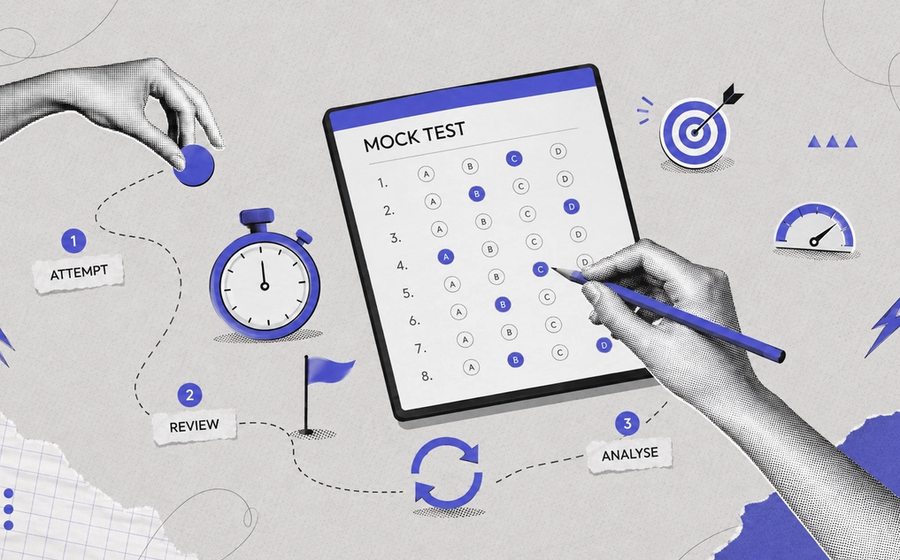 Exam Guide
NEET PG Mock Test Strategy: How to Attempt, Review & Analyse Your Tests
A NEET PG mock test is only as useful as what you do after it. Most aspirants take mocks, glance at the score, feel good or bad for an hour, and move on — and then wonder why their marks plateau. The
 Exam Guide
NEET PG Study Plan 2026: Your Month-by-Month Schedule
A clear NEET PG study plan is the difference between preparation that compounds and preparation that drifts. The syllabus spans nineteen subjects, the exam rewards application over recall, and the asp
 Exam Guide
Best Books for NEET PG 2026: Complete Subject-Wise Guide
Choosing the right books is the first real decision of your NEET PG preparation — and one of the most consequential. The NEET PG syllabus is vast, the exam rewards application over recall, and the stu
 Exam Guide
NEET PG 2026 Exam Centre: City List, Allotment Process & Exam Day Guide
Your NEET PG exam centre is where months of preparation finally meet the exam. Knowing how the centre is allotted, when you will find out where you are going, and what the rules are on exam day remove