NEET PG 2026: 2,65,980 Candidates Appeared — Full Attendance and Centre Details
By Dr. Utsav Bhattacherjee, MBBS, MBA · 31 Aug 2026 · 8 min read
Last updated: 23 Sept 2026
On this page
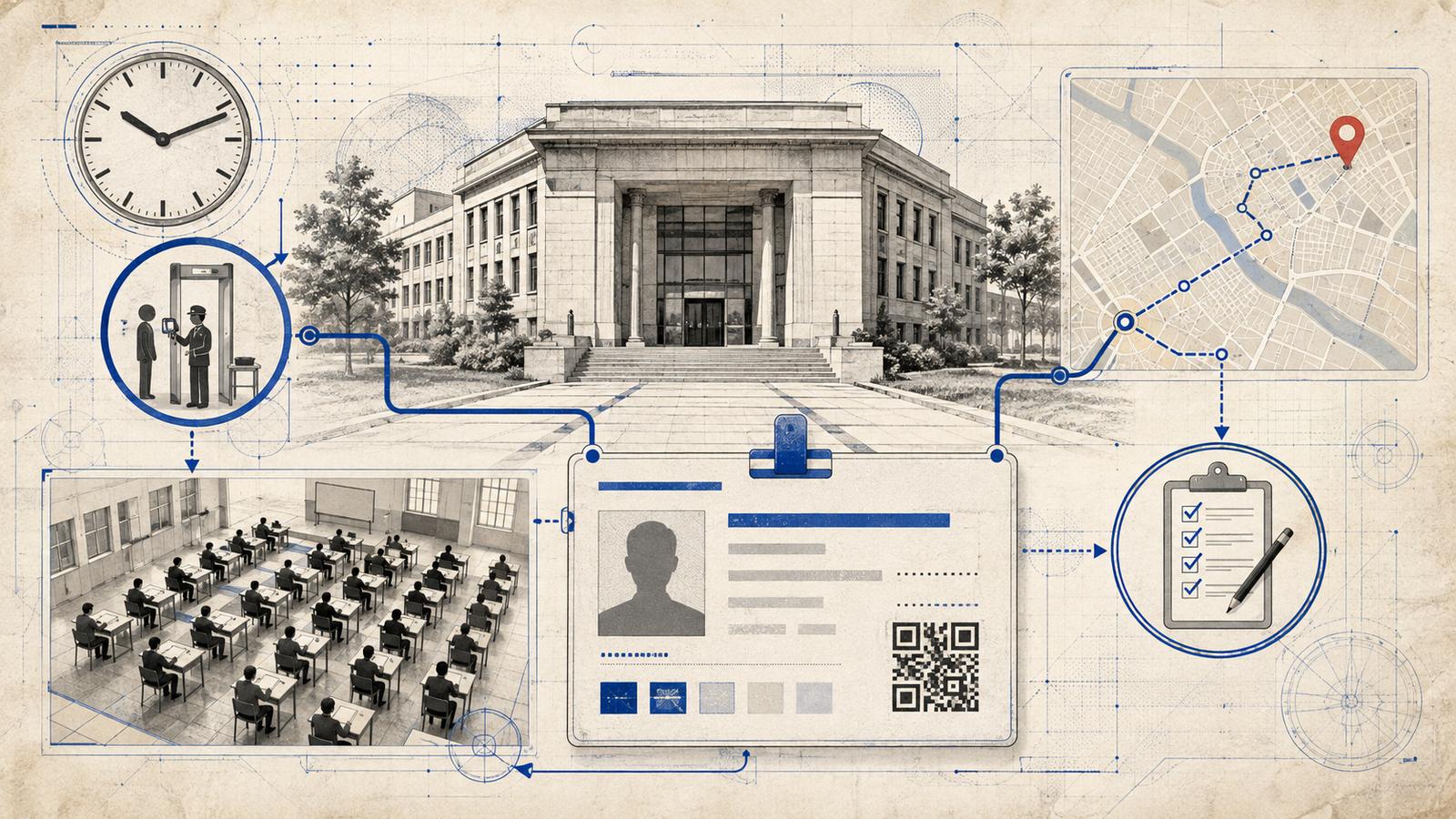
NBEMS has released the full picture of how NEET PG 2026 was conducted on August 30 — registration, attendance, and the scale of the operation required to run a single-shift exam of this size nationwide.
The Numbers
- Registered candidates: 2,73,096
- Candidates who appeared: 2,65,980
- Candidates who successfully completed the exam: approximately 2,63,535
- Examination centres: 1,111
- Cities covered: 338, spanning all 36 states and Union Territories
The gap between registered and appeared candidates — roughly 7,100 — reflects the normal pattern of no-shows in a high-stakes national exam, not anything specific to this cycle. The smaller gap between appeared and completed reflects the isolated technical disruption at two Jaipur centres, covered separately in our Jaipur re-exam guide.
Why Single-Shift Matters for This Scale
Running an exam this large in a single shift — rather than splitting candidates across morning and afternoon sessions — is a genuinely significant logistical undertaking. Every one of the 1,111 centres had to be operational simultaneously from 9:00 AM to 12:30 PM, with no second window to absorb any centre-level issues. This is part of why the single-shift format, introduced as part of this year's pattern changes, raised real operational stakes — and why the Jaipur disruption, however isolated, drew attention given there was no same-day fallback shift for those candidates.
The Security and Monitoring Operation
NBEMS deployed a substantial monitoring infrastructure to run the exam nationwide:
- 2,527 independent appraisers stationed across centres
- More than 700 senior faculty members serving as flying squads, able to respond to issues across multiple centres
- 16 regional command centres coordinating oversight across the country
This scale of deployment reflects both the exam's importance and the practical challenge of monitoring over a thousand centres simultaneously, in a single shift, with no room for a delayed response to any centre-level problem.
How This Year Compares
NEET PG's candidate pool has grown meaningfully year over year — this cycle's registration reflects roughly a 12–13% increase over the prior year's numbers, consistent with a broader multi-year growth trend in the applicant pool. That growth matters beyond raw statistics: it's part of why the same raw score tends to buy a progressively worse rank each cycle, a dynamic we've covered separately in our piece on rank inflation. A larger candidate pool, sitting the same fixed-format single-shift exam, is also part of why the logistics described below — centre allocation, monitoring infrastructure — carry more operational weight each year than the year before.
How Centre Allocation Actually Works
This year's centre allocation ran on a state-based selection system rather than the older city-specific, first-come-first-served model. Candidates indicated preferred states during registration, and NBEMS allotted centres accordingly — a structural change explicitly intended to reduce the anxiety-driven rush to register within minutes of the portal opening, since submission timing no longer affects which centre you're allotted. Whether this fully eliminated centre-allocation complaints is a separate question — the Jaipur disruption, after all, was a technical failure at an allotted centre, not an allocation dispute — but it did represent a genuine procedural shift from prior cycles' city-level, timing-sensitive allocation.
Why Diploma Seats Add Context to This Year's Numbers Specifically
This year's attendance figures land against a backdrop of a separate, significant structural change to the seat matrix candidates are ultimately competing for: the National Medical Commission has directed that 2026–27 will be the final admission year for two-year PG diploma courses, with those seats subsequently converting to MD/MS degree seats. For anyone going through NEET PG 2026 counselling, that means the composition of the seat matrix you're competing within this cycle is itself in transition — worth knowing, even though it doesn't change your own exam performance.
What This Means for Competition
With 2,65,980 candidates competing for a national seat matrix that hasn't expanded proportionally to the growth in candidates year over year, this year's attendance figures are worth keeping in mind when thinking about your own rank and cutoff expectations. For how marks translate into rank and why the same score can buy a different rank than it did in past years, see our guide on NEET PG marks vs rank and our piece on rank inflation.
The Seat Matrix Candidates Are Competing For
Putting the attendance figures against the actual seat count sharpens the picture of how competitive this cycle is. NEET PG admits to roughly 26,168 MD seats, 13,649 MS seats, and 922 PG Diploma seats, spread across more than 6,100 government, private, deemed, and central university institutions nationally. Set against 2,65,980 candidates who appeared, that's a seat-to-candidate ratio worth sitting with honestly — even before accounting for how unevenly those seats are distributed across specialities, colleges, and categories. The PG Diploma figure specifically is the one now heading toward zero over the next admission cycle, per NMC's phase-out directive, which will shift more of that competition onto the MD/MS pool directly in future years.
Reservation Categories Shape the Real Competition
The raw attendance number is a useful headline figure, but it isn't what determines any individual candidate's actual competition — that's shaped by category-wise reservation, which splits the seat matrix (and the qualifying percentile thresholds) differently for General/EWS, SC/ST/OBC, and PwBD candidates. Two candidates with identical exam performance can face meaningfully different effective competition depending on category, since each category draws from its own portion of the seat matrix rather than one undifferentiated pool. This is part of why a single "good score" benchmark doesn't apply uniformly — the more useful frame is your rank and percentile within your own category, not just your raw score against the national total.
Reading the Completion Rate Correctly
It's worth being precise about what the appeared-versus-completed gap actually represents, since it's easy to misread. Of the 2,65,980 who appeared, roughly 2,63,535 completed the exam — a gap of about 2,445, which maps almost exactly onto the number of candidates affected by the Jaipur disruption. That's not a coincidence: outside of that one incident, NBEMS's own reporting doesn't point to any other centre-level completion failures nationwide. Read narrowly, that's a strong operational result for a single-shift exam run simultaneously across 1,111 centres — the failure was contained to two centres, not a systemic issue, and NBEMS has already committed to a fix (the September 5 re-exam) for the exact number of candidates affected.
For the complete timeline of how this exam cycle unfolded — registration, pattern changes, and what's still ahead — see our NEET PG 2026 notification and timeline guide.
Practise this on Reflex
Turn what you just read into recall with 14 years of tagged PYQs.
FAQ
Frequently asked questions
The questions aspirants ask most about this topic.
2,65,980 candidates appeared, out of 2,73,096 registered. Approximately 2,63,535 successfully completed the exam.
1,111 centres across 338 cities, covering all 36 states and Union Territories.
The small gap primarily reflects the technical disruption at two Jaipur centres, which prevented 2,445 candidates from completing their exam — those candidates have a re-exam scheduled for September 5, 2026.
2,527 independent appraisers, over 700 senior faculty flying squads, and 16 regional command centres coordinated monitoring across the country.
Centres are allotted based on a state-level preference candidates indicate during registration, rather than the older city-specific, first-come-first-served system — submission timing no longer affects which centre you're allotted.
Registration reflects roughly a 12–13% increase over the prior year, consistent with a broader multi-year growth trend in the NEET PG candidate pool.
Roughly 26,168 MD seats, 13,649 MS seats, and 922 PG Diploma seats nationally — though the PG Diploma count is set to phase out after this admission cycle under NMC's new policy.
About the author
Stay ahead in your preparation
Get expert tips, exam updates, and high-yield insights delivered straight to your inbox.
No spam. Unsubscribe anytime.
More in Exam Guide
View all → Exam Guide
INI-CET November 2026: How to Use Your Last 30 Days, Week by Week
 Exam Guide
NEET PG 2026 Result Declared: Cutoff 262/720 & Scorecard
 Exam Guide
INI-CET Registration for January 2027: The Two-Stage Process, Documents, and Mistakes to Avoid
 Exam Guide