Mallampati Classification for NEET PG: Classes I to IV, What the Test Predicts and Where It Fails
Reflex · 14 Nov 2026 · 13 min read
Last updated: 14 Nov 2026
On this page
Before induction, an anaesthetist has a short window to answer one question: will the laryngoscope show the glottis? The Mallampati classification is the bedside test built for that question. A seated patient opens the mouth and protrudes the tongue, and you grade how much of the throat is visible.
This note covers the technique, the four classes, the link to the Cormack-Lehane view, how accurate the test is, other airway predictors, LEMON, and the situations where the class shifts. It sits beside the ASA physical status classification as part of pre-anaesthetic assessment.
Key Takeaways
The modified Mallampati class is graded on a seated patient with the mouth wide open, tongue out and no phonation. A higher class means fewer structures are visible.
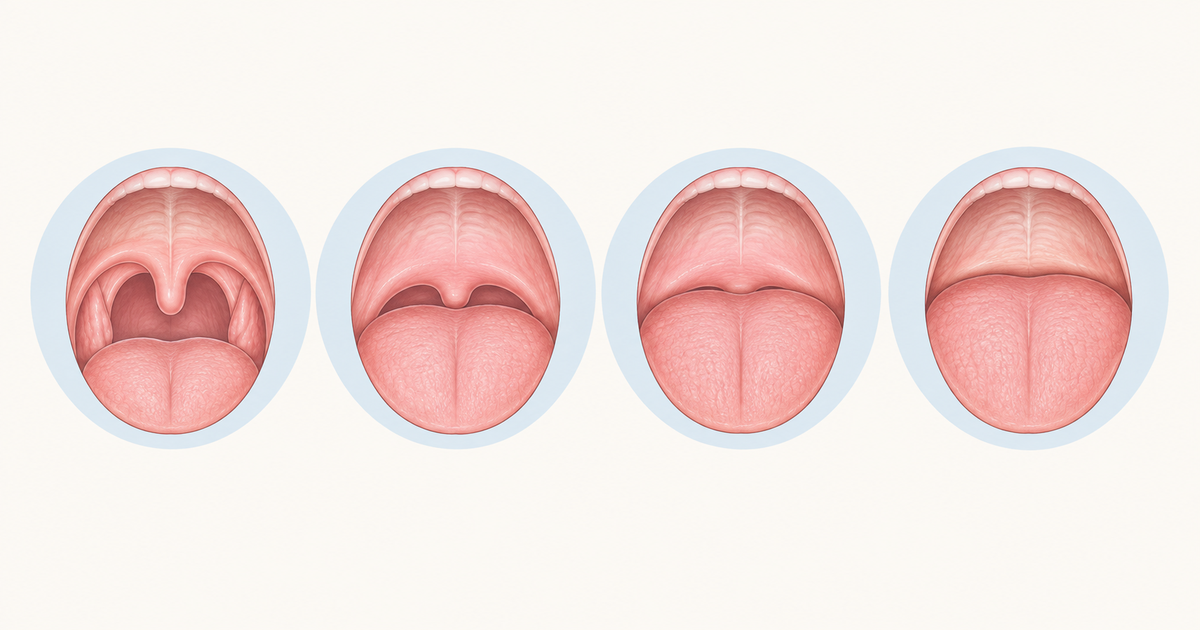
Class I shows the soft palate, fauces, uvula and pillars. Class II loses the pillars. Class III shows the soft palate and only the base of the uvula. Class IV shows no soft palate.
Classes III and IV predict difficult laryngoscopy and intubation. Cormack-Lehane is the view seen at laryngoscopy, not a bedside test.
Pooled sensitivity is modest, specificity is higher and positive predictive value is low. The test predicts difficult mask ventilation poorly.
Combine Mallampati with other predictors such as thyromental distance, the upper lip bite test or LEMON, and stay prepared for difficulty that no test predicts.
What the Mallampati Classification Measures
The Mallampati test grades how much of the oropharynx you can see with the mouth open and the tongue protruded. The usual rationale is that a disproportionately large tongue base hides the pharynx and, by extension, the larynx (Huang 2011).
Mallampati's 1985 prospective study of 210 patients found that the grade predicted laryngoscopic difficulty (Mallampati 1985). Samsoon and Young added the fourth class in 1987, after a retrospective study of patients in whom intubation had previously been impossible. They found that difficulty correlated with the oropharyngeal anatomy seen in the same patient (Samsoon and Young 1987). This four-class version is the modified Mallampati score used today.
How to Perform the Mallampati Test
The grade depends on how the test is done, so the technique needs to be standardised (Huang 2011; Wajekar 2015; Anesthesiol Res Pract 2023):
- Seat the patient upright with the head in a neutral position.
- Ask the patient to open the mouth as wide as possible and protrude the tongue fully.
- Do not ask the patient to say "ah" (no phonation).
- Look from the level of the patient's mouth, using a penlight or torch.
- Grade by the structures visible, using the class table below.
Why Phonation, Posture and Breathing Change the Class
Phonation improves the view. In two groups of 64 patients examined by two observers, saying "ah" markedly and consistently improved the view, and about 25% of patients phonated spontaneously. Moving from upright to supine produced a small, non-significant worsening (Tham 1992).
In 661 patients, testing without phonation gave higher sensitivity, while phonation raised specificity but produced more false negatives (Khan 2015). The practical lesson is to use the sitting, no-phonation technique every time, because phonation can downgrade the class and hide a difficult airway.
Breathing phase also matters. In 100 surgical patients, 42% scored worse by one or two classes on inspiration and 36% on expiration, against the chart score (Anesthesiol Res Pract 2023). This is a small single-centre sample, so read it as a caution rather than a rule.
Mallampati Classification: Classes I to IV
In the modified (Samsoon and Young) version, each step up hides more landmarks: the pillars go first, then the fauces and most of the uvula, then the soft palate.
| Class | Structures visible | Predicted laryngoscopy |
|---|---|---|
| I | Soft palate, fauces, uvula and pillars | Easy |
| II | Soft palate, fauces and uvula | Easy |
| III | Soft palate and base of the uvula | Difficult |
| IV | Soft palate not visible (only the hard palate is seen) | Difficult |
The wording follows Huang 2011, and Wajekar 2015 and Marchis 2024 give essentially the same definitions. A 2025 systematic review words Class IV as "only the hard palate visible" (2025 review).
A memory aid: ask what has gone missing. Class I loses nothing, Class II loses the pillars, Class III loses the fauces and most of the uvula, and Class IV loses the soft palate.
Original Three-Class Version Versus the Modified Version
Mallampati's original 1985 scheme had three classes, so "Class III" does not mean the same thing in both versions (Anesthesiol Res Pract 2023).
- Class I: faucial pillars, soft palate and uvula visible.
- Class II: pillars and soft palate visible, with the uvula masked by the base of the tongue.
- Class III: only the soft palate visible.
The sources give no one-to-one mapping from these three classes onto the four modified ones, so learn each scheme separately. The difference matters in practice: a meta-analysis of 42 studies reported an area under the summary ROC curve for difficult intubation of 0.83 for the modified version and 0.58 for the original (Lee 2006).
Mallampati Class and Cormack-Lehane Grade
Classes I and II predict easy laryngoscopy and intubation, and Classes III and IV predict difficult laryngoscopy and intubation (Wajekar 2015; Khan 2015). The Cormack-Lehane (CL) grade is different: it is the view you actually get at laryngoscopy, known only once the blade is in.
| CL grade | View at laryngoscopy |
|---|---|
| 1 | Most of the glottis visible |
| 2 | Only the posterior glottis and epiglottis visible |
| 3 | Only the epiglottis visible |
| 4 | Not even the epiglottis visible |
Grades 3 and 4 are labelled difficult laryngoscopy, and most studies define it this way (Marchis 2024). Difficult laryngoscopy does not always mean difficult intubation: among 402 patients, 46 (11.4%) had difficult laryngoscopy, but intubation failed in only 2 (0.49%) (Wajekar 2015).
How Accurate Is the Mallampati Classification?
Mallampati is better at flagging a problem than at excluding one. Every review below finds low or modest sensitivity, higher specificity, and a test that is inadequate as a stand-alone screen.
Pooled Sensitivity and Specificity
| Review | Data pooled | Sensitivity | Specificity |
|---|---|---|---|
| Lundstrom 2011 (Class III/IV positive) | 55 studies, 177,088 patients | 0.35 | 0.91 |
| Cochrane 2018, difficult laryngoscopy | 133-study review of all tests | 0.53 (0.47-0.59) | 0.80 (0.74-0.85) |
| Cochrane 2018, difficult intubation | Same review | 0.51 (0.40-0.61) | 0.87 (0.82-0.91) |
| Cochrane 2018, difficult mask ventilation | Same review | 0.17 (0.06-0.39) | 0.90 (0.81-0.95) |
| Wang 2024 | 210 studies, 532,526 patients | 0.39 | 0.86 |
Sources: Lundstrom 2011, Cochrane 2018 and Wang 2024.
The figures differ because reviews pool different studies, outcomes and cut-offs, so quote the source with the number.
Why the Positive Predictive Value Is Low
Difficult intubation is uncommon, which drags positive predictive value down. A 2026 review puts its prevalence at about 10% in surgical series, and even with specificity of 0.83 to 0.90, false positives outnumber true positives (Beyond Mallampati review 2026).
An Indian cohort of 300 patients, in which 5.33% had difficult laryngoscopy (Cormack-Lehane grade 3 or 4), shows the effect. Modified Mallampati had sensitivity 68.8%, specificity 73.9%, PPV 12.9% and NPV 97.7% (Kaniyil 2018). The NPV looks reassuring but mostly reflects how rare the event is. The arithmetic is worked in the sensitivity and specificity note with a 2x2 table.
Observer Variability and Blind Spots
Observers disagree. In 101 adults assessed by two blinded assessors across 15 tests, kappa was 0.50 for modified Mallampati and 0.37 for the upper lip bite test, with essentially no agreement for thyromental distance and cervical mobility (Beyond Mallampati review 2026).
Mask ventilation is the main blind spot. Cochrane pooled sensitivity was only 0.17, and in a mask-ventilation meta-analysis cited by the 2026 review, Class III-IV ranked eighth among risk factors (odds ratio 2.36).
Most difficult intubations are also not predicted. In 188,064 patients in the Danish Anaesthesia Database, 3154 of 3391 difficult intubations (93%) were unanticipated, and only 229 of 929 anticipated cases (25%) proved difficult (as reported in the 2026 review).
Other Airway Assessment Predictors and Their Cut-offs
No single measurement closes the gap. Mallampati plus thyromental distance was the best bedside combination in an older meta-analysis (positive likelihood ratio 9.9; 95% CI 3.1-31.9) (Shiga 2005), and the 2024 meta-analysis favoured a combined, tailored approach over any one method (Wang 2024).
| Test | How it is measured | Cut-offs reported | Cochrane sensitivity / specificity, difficult laryngoscopy |
|---|---|---|---|
| Thyromental distance (TMD) | Mentum to thyroid notch, neck fully extended | Under 6 cm (Wajekar 2015, Kaniyil 2018); 6.5 cm (Cochrane); under 6.5 cm (Khan 2009); about 4 to 7 cm across the studies Cochrane reviewed | 0.37 / 0.89 |
| Sternomental distance (SMD) | Manubrium to mentum, head fully extended, mouth closed | Under 12.5 cm (Cochrane; 13.5 cm also used); under 13 cm (Khan 2009) | Not reported here |
| Mouth opening (interincisor gap) | Distance between upper and lower incisors | 3.5 cm (Cochrane); under 4.5 cm (Khan 2009); 3 fingers (LEMON); 5 cm (Wilson score) | 0.22 / 0.94 |
| Upper lip bite test (ULBT) | Lower incisors bite the upper lip, head neutral | Class I: bites above the vermilion border. Class II: bites below it. Class III: cannot bite the upper lip (positive) | 0.67 / 0.92 |
| Neck extension | Range of head and neck movement | Under 80 or under 90 degrees in studies reviewed by Cochrane | Not reported here |
| Neck circumference | Tape measure | 34.2 to 42 cm across studies in a review of difficult laryngeal exposure at microlaryngoscopy, with inconsistent results (Acta Otorhinolaryngol Ital 2026) | Not reported here |
| Wilson risk score | Five items scored 0 to 2 (total 0 to 10): weight (under 90, 90 to 110, over 110 kg), head and neck movement, jaw movement, receding mandible, buck teeth (Marchis 2024) | Above 2 positive; above 4 in some studies (Cochrane) | Not reported here |
Table sources: Wajekar 2015, Kaniyil 2018, Khan 2009, Acta Otorhinolaryngol Ital 2026 and Marchis 2024.
Cochrane figures and test definitions come from Roth 2018. Cut-offs vary between sources, which is itself a finding: learn each landmark and the range, and treat one number as one source's choice. Wajekar attributes the under 6 cm TMD figure to Patil and Shiga, and Kaniyil notes that TMD suffers from observer variability and an unclear mentum endpoint.
The Cochrane review found the ULBT had the most favourable overall properties, although it cannot be used in edentulous patients (Roth 2018; Beyond Mallampati review 2026).
LEMON for the Difficult Airway
LEMON turns the bedside findings into a checklist: Look externally, Evaluate 3-3-2, Mallampati, Obstruction, Neck mobility. In 156 emergency intubations, a higher LEMON-based score was more likely to go with a poor laryngoscopic view (Reed 2005). An emergency airway review cites Reed as showing that traditional anatomical scoring tools have limited discriminative accuracy in emergency populations.
| Letter | What to assess |
|---|---|
| L: Look externally | Facial trauma, beard, macroglossia, morbid obesity |
| E: Evaluate 3-3-2 | Mouth opening at least 3 fingers; hyoid to mentum at least 3 fingers; hyoid to thyroid at least 2 fingers |
| M: Mallampati | Class I to IV; often impractical in uncooperative or obtunded patients |
| O: Obstruction | Epiglottitis, peritonsillar abscess, angioedema, airway trauma |
| N: Neck mobility | Limited by a cervical collar, degenerative joint disease or trauma |
The table follows an emergency airway review. Read 3-3-2 as fingers: mouth, chin to hyoid, hyoid to thyroid. LEMON is purely anatomical and ignores physiology.
Mallampati Class in Pregnancy, Labour and Obesity
The class is not a fixed property of the patient. It moves with pregnancy, labour and body habitus, so one early assessment may not hold when the airway is managed.
Pregnancy and Labour
In 87 pregnant patients, the proportion in Class 3-4 climbed through labour and delivery (Boutonnet 2010).
| Time point | Patients in Class 3-4 |
|---|---|
| 8th month of pregnancy | 10.3% |
| At epidural placement in labour | 36.8% |
| 20 minutes after delivery | 51.7% |
| 48 hours after delivery | 20.7% |
About 37% of patients did not change class, and the rise was not fully reversed by 48 hours. A 2025 systematic review of 10 prospective observational studies recommends reassessing the airway in late pregnancy and during labour, with a video laryngoscope and fibreoptic equipment ready for high-risk women such as those with pre-eclampsia (2025 review).
Obesity and Sleep Apnoea
In obesity, difficult mask ventilation is the larger problem, while laryngoscopy is often unremarkable. Mask ventilation is difficult in 14.4% of obese patients against 6.1% overall, and obstructive sleep apnoea carries a three- to four-fold higher risk of difficult intubation, difficult mask ventilation or both. In morbidly obese patients, a positive ULBT had a positive likelihood ratio of 6.35 to 9.47 against 3.16 to 3.21 for modified Mallampati (Beyond Mallampati review 2026).
What to Do When a Difficult Airway Is Predicted
A prediction should change the plan. The guidance below is qualitative, because the sources give principles rather than one fixed algorithm.
- AIDAA 2016 (India): No available test is completely reliable, so be prepared for a difficult airway at all times. Use pre-operative sedation with caution, consider marking the cricothyroid membrane before induction, and use THRIVE when available if a difficult airway is anticipated. Nasal apnoeic oxygenation is advised in all intubations. If a difficult airway is predicted and mask ventilation fails, a supraglottic airway can serve as the primary oxygenation method (Myatra 2016).
- DAS 2025: Pre-identify and, where appropriate, mark the cricothyroid membrane in anticipated difficult airways (guideline citation; recommendation as summarised in the emergency airway review).
- ESAIC 2025: Combine multiple tests (grade 1A), vary the minimum test set by pathology (grade 2C), and extend assessment to physiology, environment, devices and expertise (grade 1C). A purely statistical approach to a static anatomical exam "will always result in poor predictive values" (Beyond Mallampati review 2026).
- Warning signs: Stridor, post-radiotherapy fibrosis, a Class 3 ULBT and previous difficulty weigh heavily towards an awake technique, and a videolaryngoscope should be available for standard care (Beyond Mallampati review 2026).
Common Mistakes With the Mallampati Classification
These are study aids for keeping the concepts apart.
- Mixing up Mallampati and Cormack-Lehane. One is a pre-operative class (I to IV), the other a laryngoscopic grade (1 to 4). Both treat III-IV as worse, so note which one a stem describes.
- Carrying one Class III definition across both versions. In the original scheme it is only the soft palate. In the modified scheme it is the soft palate plus the base of the uvula.
- Reading a higher class as more visible. A higher class means fewer structures are seen, and phonation lowers the class, so use the standard technique.
- Using Mallampati for mask ventilation. It addresses laryngoscopy and intubation, and its pooled sensitivity for mask ventilation is poor.
- Treating high specificity or NPV as proof of a good screening test. A positive result is informative, but a negative result is weak reassurance.
- Memorising one TMD, SMD or mouth-opening number. These are distances from different landmarks, and sources use different cut-offs. If a stem gives a value, first identify the landmark.
Summary: Using the Mallampati Classification Well
The Mallampati classification grades the visible oropharynx in a seated patient, mouth open and tongue out, without phonation. Classes III and IV flag likely difficult laryngoscopy. Its pooled sensitivity is modest, its positive predictive value is low, it says little about mask ventilation, and the class shifts with technique, breathing, pregnancy and observer. Combine it with thyromental distance, the upper lip bite test and LEMON, and plan for the difficulty no test predicts. To test recall, redraw the four views from memory and then try the airway management practice questions.
Practise this on Reflex
Turn what you just read into recall with 14 years of tagged PYQs.
FAQ
Frequently asked questions
The questions aspirants ask most about this topic.
Class IV (class 4) means the soft palate is not visible at all when a seated patient opens the mouth wide and protrudes the tongue, so only the hard palate is seen. Samsoon and Young added it to Mallampati's original three-class scheme in 1987. Classes III and IV predict difficult laryngoscopy and intubation, but the test has modest sensitivity and a low positive predictive value, so it is combined with other predictors.
Yes. In a study of two groups of 64 patients examined by two observers, saying "ah" markedly and consistently improved the view, and about 25% of patients phonated spontaneously. In a study of 661 patients, testing without phonation gave higher sensitivity, while phonation raised specificity but caused more false negatives. The standard technique is a seated, upright patient with the mouth wide open, the tongue fully out and no phonation.
No. A 2024 meta-analysis pooled the sensitivity of modified Mallampati at 0.39 and its specificity at 0.86, and the Cochrane review found a sensitivity of only 0.17 for difficult mask ventilation. In a Danish database of 188,064 patients, 93% of difficult intubations were not anticipated. European guidance advises combining several tests and staying prepared for unanticipated difficulty.
Mallampati class (I to IV) is a bedside prediction made before anaesthesia from what is visible in the open mouth. The Cormack-Lehane grade (1 to 4) is the view of the larynx actually obtained at laryngoscopy: grade 1 shows most of the glottis, grade 2 the posterior glottis and epiglottis, grade 3 only the epiglottis, and grade 4 not even the epiglottis. Grades 3 and 4 are labelled difficult laryngoscopy.
The 3-3-2 rule is the Evaluate step of LEMON. It asks for a mouth opening of at least 3 fingers, a hyoid-to-mentum distance of at least 3 fingers and a hyoid-to-thyroid distance of at least 2 fingers. LEMON stands for Look externally, Evaluate 3-3-2, Mallampati, Obstruction and Neck mobility.
Stay ahead in your preparation
Get expert tips, exam updates, and high-yield insights delivered straight to your inbox.
No spam. Unsubscribe anytime.
More in Subject Notes
View all → Anesthesia
ASA Physical Status Classification for NEET PG: Classes I to VI, Examples and the E Modifier
A clear walk through the ASA physical status classification: what each class means, example patients, the E modifier for emergencies, and the sorting mistakes to avoid.
 Anesthesia
Malignant Hyperthermia for NEET PG: Why Hypercarbia, Not Fever, Is the Sign That Matters First
 Anesthesia
Anaesthesia for NEET PG 2026: High-Yield Topics, Spinal Complications, and Drug Doses
Anaesthesia is 3 to 6 questions out of 180 — and one of the most repetitive subjects in the paper. Fifteen topics, done properly, reliably cover all of them.
 Surgery
Hemorrhagic Shock Classification for NEET PG: ATLS Class I to IV, Blood Loss and Vital Signs
The ATLS Class I to IV hemorrhagic shock table with blood loss percentage and volume, pulse, blood pressure and urine output, how to read it as a pattern, the European guideline's first-line management and where the classes fall short.