NEET PG/INICET Preparation Tips to Score High in Pharmacology
By Dr. Utsav Bhattacherjee, MBBS, MBA · 6 Oct 2025 · 10 min read
Last updated: 23 Sept 2026
On this page
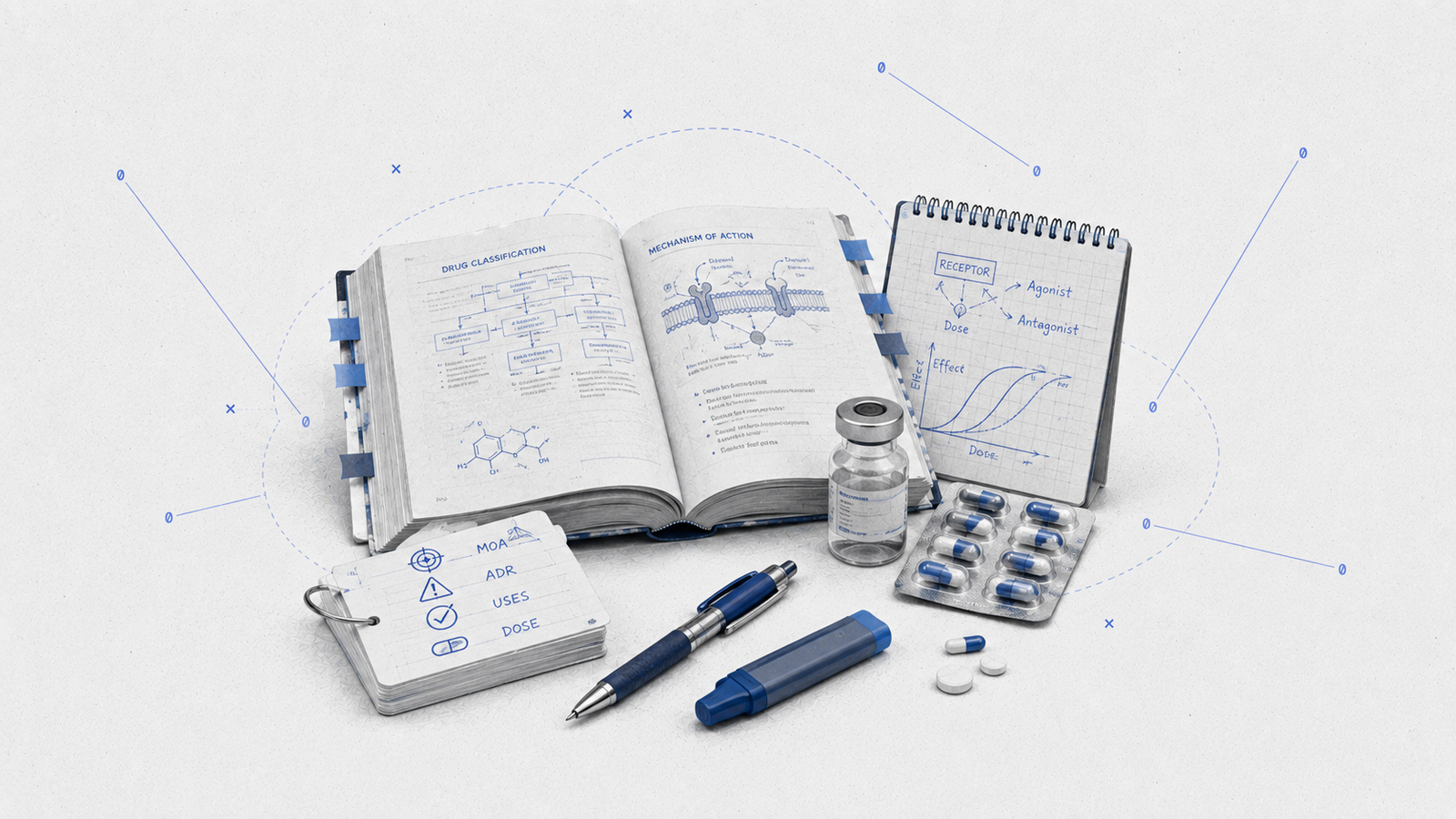
Pharmacology is one of the most crucial subjects in medical postgraduate entrance exams. While many students find it vast and volatile, the good news is that with the right strategy, pharmacology can become a high-scoring subject in NEET PG and INICET. The key lies in building strong fundamentals, practicing previous year questions (PYQs), and performing smart and repeated revision.
This guide shares practical preparation strategies along with tips on using the REFLEX app to practice PYQs effectively.
Key Takeaways
- Pharmacology contributes 15–20 direct questions in NEET PG, with another 40–50 questions across the exam requiring pharmacological reasoning — making it a core subject, not a side topic.
- Master General Pharmacology first, then move system-wise, prioritizing Antimicrobials and CNS drugs since these are the most frequently tested areas.
- PYQs are the foundation of preparation — even when questions don't repeat exactly, the concepts and themes usually do.
- Smart notes (classifications, mechanisms, side effects, DOC tables) plus mnemonics beat rote memorization, and active recall through timed practice builds retention.
- A structured 3-month plan (Foundation → High-Yield Systems → Rapid Revision), tightened to 50–70 PYQs a day in the final 30 days, is enough to turn pharmacology into a scoring strength.
Why Pharmacology Matters in NEET PG/INICET
Pharmacology contributes directly to exam scores, but its importance extends far beyond that. You will encounter it in direct MCQs on drug mechanisms, side effects, and antidotes; in integrated clinical questions across Medicine, Pediatrics, OBGYN, Surgery, and Anesthesia; in image-based questions involving drug vials or strips; and in therapeutic decision-making questions.
On average, 15–20 direct questions come from pharmacology, and nearly 40–50 questions across the exam require pharmacological reasoning. This makes pharmacology a core subject for exam success.
Understanding the Pharmacology Syllabus
Pharmacology is vast, but not every topic carries equal weight, and knowing what to prioritize is essential.
High-Yield Areas
General Pharmacology
- Pharmacokinetics
- Pharmacodynamics
- Receptor mechanisms
- Drug interactions
- Adverse drug reactions
Autonomic Nervous System
- Sympathomimetics
- Sympatholytics
- Parasympathomimetics
- Parasympathetic blockers
Central Nervous System
- Antiepileptics
- Antidepressants
- Antipsychotics
- Anesthetics
- Drugs for Parkinsonism and Alzheimer’s
Cardiovascular and Renal Drugs
- Antihypertensives
- Antianginals
- Antiarrhythmics
- Diuretics
Antimicrobials
- Beta-lactams
- Macrolides
- Aminoglycosides
- Antitubercular drugs
- Antifungals
- Antivirals
Endocrine Pharmacology
- Insulin
- Oral hypoglycemics
- Steroids
- Thyroid drugs
- Contraceptives
Chemotherapy and Targeted Therapy
- Cancer chemotherapy drugs
- Monoclonal antibodies
Miscellaneous
- Immunosuppressants
- Emergency drugs
- Drugs used in pregnancy
Choosing the Right Resources
Pharmacology can feel difficult because it is both conceptual and memory-intensive, so your choice of teacher and resources makes a huge difference. Many aspirants prefer learning pharmacology from Dr. Ankit Kumar, whose teaching style simplifies complex mechanisms. A simple formula that works well: Dr. Ankit Kumar's lectures, combined with concise notes and consistent PYQ practice. One helpful tip — writing drug names repeatedly in a notebook helps strengthen memory retention.
The Golden Rule: PYQs First
Previous Year Questions form the foundation of exam preparation. Even if questions do not repeat exactly, concepts and themes often recur. Using the REFLEX app helps you access 10+ years of PYQs, practice questions topic-wise, learn through detailed explanations, and track accuracy and weak areas. Solving PYQs after studying each topic reinforces both knowledge and exam strategy.
Step-by-Step Pharmacology Preparation Strategy

1. Master General Pharmacology First
General pharmacology forms the conceptual base. Focus on receptor pharmacology, dose-response curves, and drug metabolism pathways, and practice PYQs before moving to system-wise topics.
2. Study System-Wise Pharmacology
Study drugs according to organ systems — CNS drugs, cardiovascular drugs, renal pharmacology, and endocrine drugs. After finishing a topic, solve PYQs immediately, and try linking pharmacology concepts with clinical medicine as you go.
3. Prioritize Antimicrobials and CNS Drugs
These areas frequently appear in exams. Create comparative tables for antibiotics, revise Drug of Choice (DOC) tables regularly, and solve antimicrobial PYQs multiple times.
4. Use Active Recall Through PYQs
Active recall improves retention dramatically. With the REFLEX app you can attempt custom quizzes, mark difficult questions, practice in timed mode, and simulate real exam conditions.
5. Make Smart Notes
Your notes should include drug classifications, mechanisms of action, major side effects, and drug of choice tables. Using mnemonics helps memorize complex drug lists — for example: INH Injures Neurons & Hepatocytes.
Using REFLEX App for Pharmacology
REFLEX offers several advantages: topic-wise PYQ practice, integrated grand tests, performance analytics, and quick revision of marked questions. Even 30 minutes of daily practice helps reinforce concepts and boost confidence.
Common Mistakes Students Make
Avoid these mistakes during preparation:
- Memorizing drugs without understanding mechanisms
- Ignoring drug interactions and side effects
- Skipping image-based drug questions
- Delaying PYQ practice until the end
- Ignoring emergency medicine drugs
Integrating PYQs early prevents these issues.
Sample 3-Month Study Plan
Month 1 – Foundation
- General pharmacology
- Autonomic nervous system
- CNS pharmacology
Practice PYQs after each topic.
Month 2 – High-Yield Systems
- Cardiovascular drugs
- Renal pharmacology
- Antimicrobials
- Endocrine pharmacology
Continue daily PYQ practice.
Month 3 – Rapid Revision
Focus on:
- Antimicrobials
- CNS drugs
- Chemotherapy
- Emergency drugs
Attempt mock tests and revise notes.
Last 30-Day Strategy
During the final month, solve 50–70 PYQs daily, revise drug of choice tables, and review common side effects. Avoid starting new resources at this stage — instead, create a list of drugs you frequently forget and revise them daily.
INICET vs NEET PG Pharmacology
Both exams test similar topics, but INICET questions tend to be deeper and more conceptual, while NEET PG often tests high-yield applied knowledge. Preparing concepts thoroughly helps in both exams.
Frequently Asked Questions
How many pharmacology questions appear in NEET PG?
Around 15–20 direct questions, with many more integrated questions across other subjects that require pharmacological reasoning.
Do I need Goodman & Gilman?
No, it is unnecessary for entrance exams. Use concise notes and PYQs instead.
What matters more — mechanism or drug of choice?
Both are important, but Drug of Choice tables and side effects are frequently tested and worth extra revision time.
How many revisions are needed?
At least three revisions before the exam. The final month should focus on PYQs and flashcards rather than fresh material.
Can I rely only on apps for pharmacology?
Yes, especially if time is limited — combine concise notes, PYQs, and lectures from a trusted faculty with consistent app-based practice.
Bottom Line
Pharmacology may appear vast, but examiners focus mainly on high-yield drugs, mechanisms, and clinical applications. By practicing PYQs regularly and revising strategically, you can transform pharmacology from a difficult subject into a scoring weapon for NEET PG/INICET. Stay consistent, revise frequently, and integrate pharmacology concepts with clinical medicine.
Good luck — your dream PG seat is waiting for you!

Practise this on Reflex
Turn what you just read into recall with 14 years of tagged PYQs.
About the author
Stay ahead in your preparation
Get expert tips, exam updates, and high-yield insights delivered straight to your inbox.
No spam. Unsubscribe anytime.
More in Subject Notes
View all → Pharmacology
Cholinergic Drugs for NEET PG: Classification, Receptors and Organophosphate Poisoning
A working classification of cholinergic drugs, the receptors behind each effect, which drug fits which clinical scenario, and how to answer organophosphate poisoning questions.
 Pharmacology
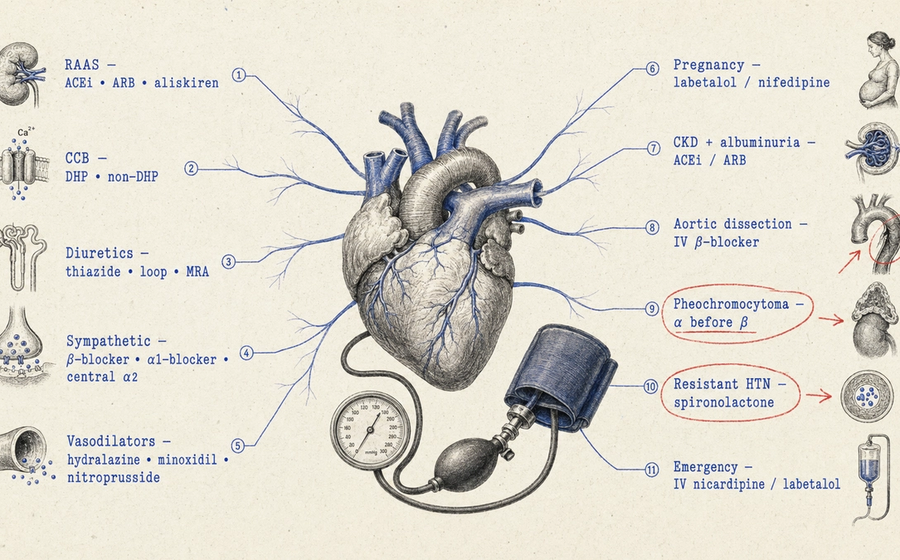
Antihypertensive Drugs for NEET PG: Classification and Drug-of-Choice Questions
Every drug class, plus the drug-of-choice scenarios examiners ask: pregnancy, post-MI, hypertensive emergency.
 Microbiology
Malaria Life Cycle for NEET PG: Species, Smear Morphology, Complications and Treatment
How the malaria parasite moves between mosquito and human, what separates the species on a smear, and how diagnosis, complications and treatment follow from the life cycle.
 Physiology
Oxygen-Hemoglobin Dissociation Curve for NEET PG: Every Shift Explained
Why the oxygen-hemoglobin dissociation curve is sigmoid, what moves it right or left, and how to apply each shift to fetal hemoglobin, stored blood, altitude and carbon monoxide poisoning.