Glasgow Coma Scale for NEET PG: E-V-M Scores, Scoring Traps and the GCS 8 Intubation Question
Reflex · 29 Nov 2026 · 12 min read
Last updated: 29 Nov 2026
On this page
The Glasgow Coma Scale (GCS) gives a total between 3 and 15 by summing three separate bedside ratings: eye opening, speech (the verbal response) and movement (the motor response). Graham Teasdale and Bryan Jennett introduced it in Glasgow in 1974, and a 2025 Cureus review calls it a nearly universal tool in trauma care.
This guide covers every score, the severity bands, the traps that distort a score, the evidence behind the "GCS 8 means intubate" teaching, CT head criteria and the paediatric version.
Key Takeaways
The GCS adds eye (1 to 4), verbal (1 to 5) and motor (1 to 6). The total runs from 3 to 15 and can never be 0.
Severity bands: mild 13 to 15, moderate 9 to 12, severe 3 to 8. A band is not a diagnosis of coma.
Write the components (for example E2 V3 M4 = 9), not only the sum.
Intubation removes the verbal score, sedation and intoxication distort all three components, and a GCS of 15 does not exclude head injury.
GCS 8 or less is the ATLS teaching threshold for securing the airway. Observational studies question a fixed number but do not show that a patient who needs intubation should go without.
An audit of NICE 2023 lists GCS 12 or less at first ED assessment, or below 15 at two hours, among the CT head risk factors.
The FOUR score and GCS-P add brainstem reflexes and pupils.
How the Glasgow Coma Scale Is Scored: Eye, Verbal and Motor
Think of the components as separate readings, like systolic and diastolic pressure: one total can hide which reading moved. Where the two sources word a response differently, a slash separates them in the table: the older wording used in the Cureus review comes first, then the 2014 wording from the glasgowcomascale.org page. That page lists categories without numbers, so the 2014 words are matched by position in each ladder.
| Score | Eye opening (E) | Verbal response (V) | Motor response (M) |
|---|---|---|---|
| 6 | - | - | Obeys commands |
| 5 | - | Oriented | Localises pain |
| 4 | Spontaneously | Confused | Withdraws from pain / normal flexion |
| 3 | To voice / to sound | Inappropriate words / words | Abnormal flexion |
| 2 | To pain / to pressure | Incomprehensible sounds / sounds | Abnormal extension / extension |
| 1 | No response | No response | No response |
The maximum is 4 + 5 + 6 = 15, and because every component bottoms out at 1, the minimum is 3. A 2025 prehospital TBI study also gives the range as 3 to 15.
A memory aid built from the table, not attributed to any source: the ceilings read E4, V5, M6, so each component's top score equals its number of response levels. In the motor ladder, the MSD Manual table glosses abnormal flexion (3) as decorticate posturing and abnormal extension (2) as decerebrate posturing.
Glasgow Coma Scale Severity Bands
The Cureus review groups totals into three bands, and the prehospital TBI study describes 3 to 8 as severe and 9 to 12 as moderate in the traditional classification.
| Total GCS | Band |
|---|---|
| 13 to 15 | Mild head injury |
| 9 to 12 | Moderate head injury |
| 3 to 8 | Severe head injury |
A counting aid, again not from any source: the top three scores are mild, the next four are moderate, and the bottom six are severe.
A band is not a diagnosis of coma. In 2,455 adults with disorders of consciousness (Bodien and colleagues, summarised in the Cureus review), no patient with a GCS of 7 or 8 was diagnosed as being in coma, and scores from 4 to 14 each matched more than one diagnosis. The review suggests "Glasgow Consciousness Scale" as a fairer name, because a GCS of 9 or more is not defined as coma.
Equal totals can also hide different patients: E2 V3 M3 and E4 V1 M3 both add to 8, and the review warns that the same total can carry very different mortality risks.
Scoring Traps in the Glasgow Coma Scale
Report the Components, Not Only the Total
Write E2 V3 M4 = 9, not just 9. In the Reith survey of 616 participants from 48 countries, 35% reported only a summary score and 30% still used the original five-step motor scale, which caps the total at 14 (both figures from the Cureus review).
Reith and colleagues advised reporting the full GCS for each patient and keeping the sum for group comparisons. The scale's own authors do not recommend the sum alone as a measure of severity or prognosis, as a FOUR score review notes.
Intubation and Sedation
An intubated patient cannot give a verbal response, and sedation confounds all three components, according to the FOUR score review. In the ICU studies pooled there, about 46.5% of patients were intubated, and the sedated share in the four studies reporting it ranged from 16.5% to 91%.
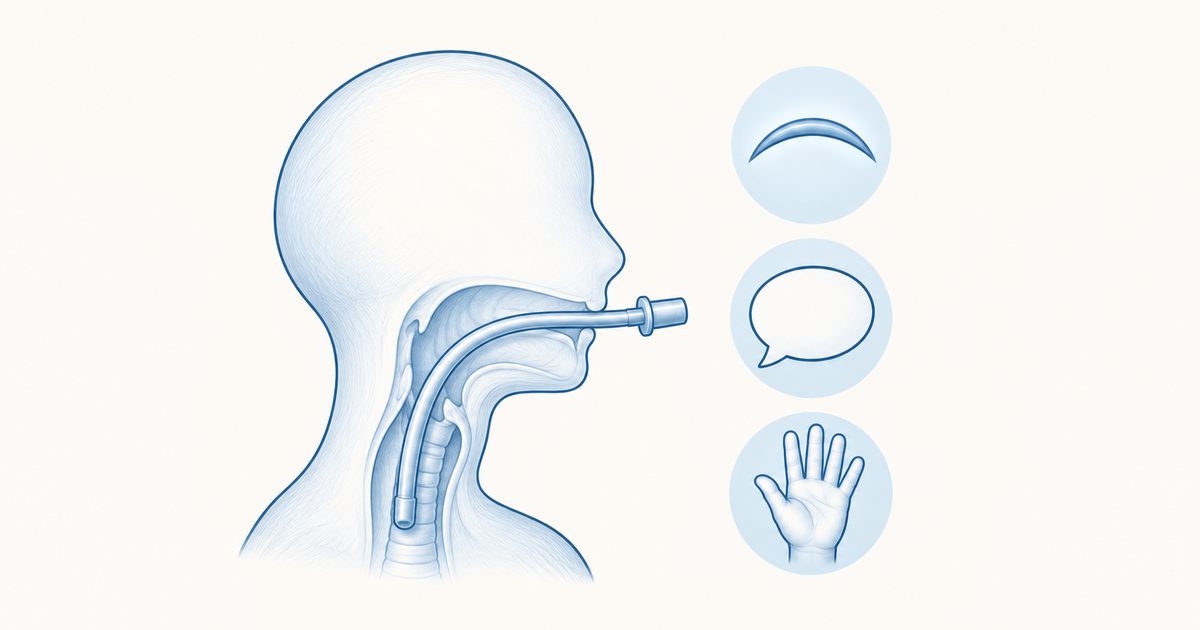
When verbal is lost, motor carries the most weight. The MSD Manual table says that if the patient is intubated, unconscious or preverbal, the motor response is the most important part. Recording components shows the next clinician which part could not be tested.
Intoxication, Language and Spinal Injury
DiGiorgio and colleagues studied 468 patients with blunt head trauma. Of the 187 with an initial GCS of 3, 150 had positive toxicology. The average change in GCS was larger in impaired patients (2.75 ± 2.7) than in unimpaired ones (1.19 ± 1.8), and the authors advise letting intoxicants dissipate before recording scores for benchmarking or quality reporting.
Language barriers, damage to Broca's area, tongue or larynx injury and aphasia distort the verbal score. Spinal injury complicates painful-stimulus scoring, and a quadriplegic patient and a neurologically intact patient can both score 15 (Cureus review).
A GCS of 15 Does Not Exclude Injury
In an Israeli registry of 18,534 isolated TBI cases, more than twice as many patients aged 75 or older had a GCS of 15 as those aged 20 to 44 (Rozenfeld and colleagues, via the Cureus review). In the prehospital TBI study, a GCS of 12 or less alone missed 6,433 older adults (aged 55 or over) who were diagnosed with moderate to severe TBI in hospital.
The same study found that 6.0% of 1,609,646 patients changed band between the prehospital and ED scores. Repeat the score instead of trusting the first.
Glasgow Coma Scale and Intubation: How to Read the GCS 8 Rule
GCS 8 or less is the ATLS teaching threshold for airway protection, and the observational studies below question a fixed cut-off. The decision rests on airway protection, ventilation and where the patient is heading.
What the Teaching Says
The ATLS course teaches that a GCS of 8 or lower mandates intubation for airway protection, as the Hatchimonji trauma study describes it. The MSD Manual table says a score of 8 or less suggests the possible need for intubation and ventilation. Learn the cut-off as "8 or less", so 8 itself is included.
Intubation preserves oxygenation and ventilation and may prevent aspiration, but it risks hypotension, needs sedating and paralysing drugs, can cause ventilator-associated complications and generally means an ICU stay. For the circulation side of ATLS trauma assessment, see the guide to ATLS hemorrhagic shock classes.
What the Studies Found
Hatchimonji and colleagues used 2016 National Trauma Data Bank records. Of 6,676 patients aged 16 or older with a GCS of 6 to 8, 4,078 were intubated within an hour of arrival. Unadjusted mortality was 17.5% with intubation and 11.4% without, but the intubated group was more severely injured (median ISS 19 versus 10) and more often hypotensive on arrival (8.7% versus 4.5%).
After inverse probability weighting, intubation was still associated with higher odds of death (OR 1.05, 95% CI 1.03 to 1.06) and longer ICU and hospital stays. The authors call it Level III evidence with a small effect. They cannot exclude confounding by indication, because findings such as anisocoria, vomiting with aspiration risk and smoke inhalation were not captured.
They stress that the data cover a marginal GCS of 6 to 8, not a severely depressed mental status, and that they do not suggest no patient in that range benefits. They ask for clinical judgement and prospective studies.
A German registry analysis points the other way in one subgroup. Among transferred patients with serious head injury and an admission GCS of 4 to 9, those who needed intubation on arrival at the receiving hospital had higher mortality (38.1% versus 20.4%) than patients who arrived already intubated. The authors frame this as possible harm from postponed intubation and note the retrospective design and the missing data on deterioration in transit (TraumaRegister DGU analysis).
Both studies are observational and open to confounding by who was intubated and why. Neither supports withholding intubation from a patient who needs a secured airway.
A Bedside Reasoning Frame
This frame is a revision aid built from the sources above, not a guideline algorithm. Ask three questions:
- Can the patient protect the airway, or is aspiration a risk?
- Are oxygenation and ventilation adequate?
- Which way is the score moving, and what comes next, such as transfer, CT or surgery?
Transfer guidance cited in the German paper says patients with a GCS of 8 or less, or a significantly deteriorating conscious level, should undergo tracheal intubation and mechanical ventilation. A GCS of 8 or less is a strong prompt to answer all three questions at once, not a replacement for them. For airway technique, practise with airway management questions.
Glasgow Coma Scale and CT Head Criteria
A Basra audit of NICE NG232 (2023) reproduces the adult criteria for people aged 16 or over. Among the risk factors for a CT head scan within one hour are a GCS of 12 or less on the initial ED assessment and a GCS of less than 15 two hours after the injury, on ED assessment. That list also covers more than one episode of vomiting, a focal neurological deficit and a post-traumatic seizure, as well as any sign of basal skull fracture or a suspected open or depressed skull fracture.
A London audit describes NG232 as recommending CT head imaging within 60 minutes for patients meeting its criteria. These are the criteria as the audits report them.
Relate the two GCS rows to the bands. A score of 12 or less covers the moderate and severe bands, and "below 15 at two hours" catches a mild-band patient who has not returned to normal.
A different number applies in suspected encephalitis. The EAN/ESCMID encephalitis guideline lists altered mental status (GCS below 10) among the signs of raised intracranial pressure, so brain imaging comes before lumbar puncture.
Paediatric Glasgow Coma Scale (Modified GCS)
The modified GCS keeps the structure but changes the infant verbal and motor wording, because preverbal children cannot give adult-style answers or follow commands. The MSD Manual Professional table gives the infant versions below. Eye opening is the same as the adult scale, and the child column matches the adult ladders.
| Score | Verbal, infant | Motor, infant |
|---|---|---|
| 6 | - | Moves spontaneously and purposefully |
| 5 | Coos and babbles | Withdraws to touch |
| 4 | Irritable cries | Withdraws to pain |
| 3 | Cries in response to pain | Decorticate posturing |
| 2 | Moans in response to pain | Decerebrate posturing |
| 1 | No response | No response |
The top scores are unchanged, so the total still runs from 3 to 15. Paediatric severity cut-offs are not uniform: the MSD table's note says a score of 12 or less suggests a severe head injury, while a 2013 letter summarised in the Cureus review proposed 5 or below. Name the source and the age group when you quote one.
Limits of the Glasgow Coma Scale: FOUR Score and GCS-P
The Cureus review lists the main gaps. The GCS ignores pupil size and reactivity, which matter for uncal herniation, does not test brainstem reflexes, weights its components unequally and has shown instances of very low inter-rater reliability.
The FOUR Score
The Full Outline of UnResponsiveness (FOUR) score has four components: eye, motor, brainstem reflexes and respiratory pattern. The European Society of Intensive Care Medicine 2014 panel recommends it to further differentiate low GCS scores, while noting limited evidence on predictive value.
| Feature | GCS | FOUR score |
|---|---|---|
| Components | Eye, verbal, motor | Eye, motor, brainstem reflexes, respiratory pattern |
| Intubated patient | Verbal cannot be assessed | All components assessable in most intubated ICU patients |
| Brainstem reflexes | Not assessed | Assessed |
In the FOUR score review of 20 ICU studies, of poor to moderate quality, the FOUR score may predict ICU and hospital mortality better. The one adequately powered study (1,645 patients) found a significant but small AUROC difference (0.742 versus 0.715). The authors say the findings cannot be extended to TBI or sedated patients on this review alone.
The GCS-P Score
The glasgowcomascale.org GCS-P page defines a pupil reactivity score (PRS): 2 if both pupils are unreactive, 1 if one is and 0 if neither is. GCS-P equals GCS minus PRS, and it ranges from 1 to 15.
In the page's worked example (IMPACT and CRASH data, 15,900 patients, six-month mortality), a GCS of 6 (E1 V1 M4) carries a 29% likelihood of death. With both pupils unreactive, the GCS-P is 4 and the likelihood is 39%.
Conclusion
The Glasgow Coma Scale is a three-part score, not a single number. Learn the ladders as E4, V5 and M6, write the components, and say which part could not be tested. Treat the bands and the GCS 8 rule as prompts for judgement: protect the airway when the patient needs it, and keep reassessing, because the score moves and the scale misses pupils and brainstem signs. To practise, score a few component sets by hand, then try the surgery trauma practice questions.
Practise this on Reflex
Turn what you just read into recall with 14 years of tagged PYQs.
FAQ
Frequently asked questions
The questions aspirants ask most about this topic.
No Glasgow Coma Scale total can be lower than 3 or higher than 15. Each component starts at 1, so the floor is 1 + 1 + 1 = 3, and the ceiling is 4 + 5 + 6 = 15 (eye opening up to 4, verbal response up to 5, motor response up to 6). Zero is not a possible score.
Totals of 3 to 8 fall in the severe band, 9 to 12 in the moderate band and 13 to 15 in the mild band. A band is not a diagnosis of coma: in a study of 2,455 adults with disorders of consciousness, no patient with a GCS of 7 or 8 was diagnosed as being in coma. Paediatric cut-offs vary by source.
The ATLS course teaches that a GCS of 8 or lower mandates intubation for airway protection, and the MSD Manual says a score of 8 or less suggests the possible need for intubation and ventilation. In an observational US trauma database study of patients with a GCS of 6 to 8, intubation on arrival was associated with higher mortality, but the authors could not exclude confounding by indication and did not suggest that no patient benefits. Treat 8 or less as a strong prompt: the decision rests on airway protection, ventilation and the direction the score is moving, and a patient who needs a secured airway should have one.
The verbal component cannot be assessed in an intubated patient, and sedation confounds all three components. The motor response then carries the most weight, and writing the components separately shows which part could not be tested. The FOUR score, which adds brainstem reflexes and respiratory pattern, can be assessed in most intubated ICU patients.
An audit that reproduces NICE NG232 (2023) lists a GCS of 12 or less on initial ED assessment, and a GCS of less than 15 two hours after the injury on ED assessment, among the risk factors for a CT head scan within one hour for people aged 16 or over.
To get the GCS-P, take the GCS and subtract a pupil reactivity score. Neither pupil unreactive scores 0, one unreactive pupil scores 1 and both unreactive scores 2, so the GCS-P can range from 1 to 15. For a GCS of 6 with both pupils unreactive, the GCS-P is 4.
Stay ahead in your preparation
Get expert tips, exam updates, and high-yield insights delivered straight to your inbox.
No spam. Unsubscribe anytime.
More in Surgery
View all → Surgery
Hemorrhagic Shock Classification for NEET PG: ATLS Class I to IV, Blood Loss and Vital Signs
The ATLS Class I to IV hemorrhagic shock table with blood loss percentage and volume, pulse, blood pressure and urine output, how to read it as a pattern, the European guideline's first-line management and where the classes fall short.
 Surgery
Alvarado Score for Appendicitis: MANTRELS Points, Cut-offs and Limits for NEET PG
Learn the Alvarado score for acute appendicitis through the MANTRELS mnemonic: item points, a worked example, what scores of 5 and 7 mean, and the groups in whom it misleads.
 Surgery
Peptic Ulcer: Duodenal vs Gastric Ulcer, H. pylori and Perforation for NEET PG
A NEET PG revision guide to peptic ulcer: a duodenal vs gastric comparison table, H. pylori treatment, modified Johnson types, special ulcers, and the work-up and surgical management of a perforated ulcer.
 Surgery