Types of Insulin for NEET PG: Onset, Peak, Duration and Regimens
Reflex · 19 Nov 2026 · 11 min read
Last updated: 19 Nov 2026
On this page
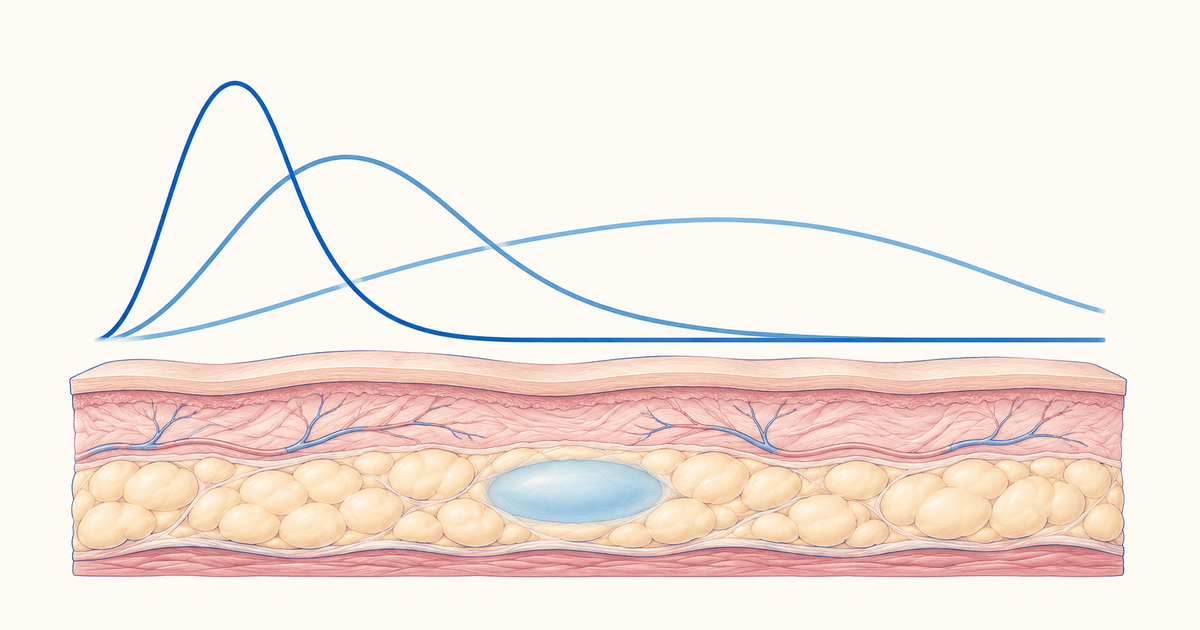
Types of insulin are grouped by how fast they start, when they act most strongly and how long they last. That profile decides dose timing around meals, which insulins can be combined and when hypoglycaemia is most likely.
This post puts every class into one table, then explains the structure, mixing rules and regimens. Treat timing figures as general guides, because sources disagree on some values.
Key Takeaways
Types of insulin: rapid-acting analogues (lispro, aspart, glulisine), regular insulin, NPH, glargine, detemir, degludec, premixes and inhaled insulin.
Rapid analogues start in about 12 to 30 minutes. Regular insulin starts in about 30 minutes and is injected about 30 minutes before a meal.
NPH has a 1 to 2 hour onset and a defined peak. Glargine, detemir and degludec show no pronounced peak.
Structure explains timing: lispro swaps B28 and B29, glargine gains two Arg, detemir carries a C14 fatty acid and degludec a C16 fatty diacid.
Never mix glargine, detemir or degludec with other insulins, and do not use premixes in type 1 diabetes.
Hypoglycaemia is the most common adverse reaction of every insulin.
Types of Insulin: Onset, Peak and Duration Table
Figures come from FDA prescribing information where the label text states them, and from the 2020 reviews by Hirsch et al. and Janez et al. (funded by Sanofi) where it does not.
| Insulin | Onset | Peak | Duration | Source |
|---|---|---|---|---|
| Lispro | 15 to 30 min | 0.5 to 2.5 h | 5 h or less | Hirsch |
| Aspart | 15 min | 1 to 3 h | 3 to 5 h | Hirsch |
| Glulisine | 12 to 30 min | About 1.5 h | About 5.3 h | Hirsch |
| Regular, subcutaneous | About 30 min (10 to 75) | About 3 h (20 min to 7 h) | About 8 h (3 to 14) | Humulin R label |
| Inhaled human insulin | About 12 min | About 35 to 55 min | Baseline by 90 to 270 min | Afrezza label |
| NPH | 1 to 2 h | 2 to 8 h | 14 to 24 h | Hirsch |
| Glargine U-100 | About 1 h | No pronounced peak | About 24 h | Lantus label, Janez |
| Glargine U-300 | Develops over about 6 h | No pronounced peak | 24 to 36 h | Toujeo label (onset), Janez (peak, duration) |
| Detemir | 1 to 2 h | No pronounced peak | Up to 24 h | Levemir label, Janez |
| Degludec | About 1 h | No pronounced peak | At least 42 h | Tresiba label (at least 42 h), Hirsch (at least 42 h), Janez (onset, peak) |
| Premix human 70/30 | About 50 min | About 3.5 h | About 23 h | Humulin 70/30 label |
| Premix lispro 75/25 | Described as rapid, no figure given | Median about 2 h | Median 22 h | Humalog Mix75/25 label |
Regular insulin duration is about 8 hours in the label, 5 to 8 hours in the Hirsch review and 6 to 12 hours in the Janez review, and the Humalog and NovoLog labels say timing differs between and within individuals. Duration lengthens from rapid analogues to regular insulin, NPH and the basal analogues. Some people show a peak effect with glargine U-100 or detemir, especially at higher doses (Janez et al.), so "no pronounced peak" is not "peakless".
Rapid-Acting Insulin: Lispro, Aspart and Glulisine
Rapid-acting analogues start within about 12 to 30 minutes and are given at the start of a meal. Each changes one or two amino acids of human insulin. In lispro and aspart this weakens the interactions that hold dimers together, so hexamers dissociate faster; glulisine can be formulated as monomers and dimers (Hirsch et al.).
| Analogue | Structural change | Label timing for meals |
|---|---|---|
| Lispro (Humalog) | Pro at B28 replaced by Lys, Lys at B29 replaced by Pro | Within 15 min before a meal or immediately after |
| Aspart (NovoLog) | Asp replaces Pro at B28 | Within 5 to 10 min before a meal |
| Glulisine (Apidra) | Lys replaces Asn at B3, Glu replaces Lys at B29 | Within 15 min before or within 20 min after starting a meal |
Their serum levels peak earlier than regular insulin's, at 30 to 90 minutes for lispro versus 50 to 120 for regular insulin, 40 to 50 versus 80 to 120 minutes for aspart, and a median of 60 versus 120 minutes for glulisine in type 1 diabetes (Humalog, NovoLog, Apidra).
Faster aspart (Fiasp) is a formulation change, not a molecular one: L-arginine and niacinamide are added to aspart. Its onset is earlier than standard aspart, but the two reviews give very different figures, so learn the direction only.
Regular Insulin and NPH: Human Insulin Preparations
Regular insulin (short-acting)
Regular insulin is a clear, colourless solution that starts in about 30 minutes, so it is injected about 30 minutes before a meal (Humulin R label).
Its slow start is structural. Human insulin forms dimers, and three dimers plus two zinc ions make a hexamer too large to readily cross capillary fenestrae, so it must dissociate in the depot before absorption (Pharm Res 2012).
NPH (intermediate-acting)
NPH (isophane) insulin is human insulin crystallised with protamine sulfate, which slows absorption. It is a sterile white, cloudy suspension containing 0.35 mg protamine sulfate and 0.035 mg zinc ion per mL (Humulin N label).
In 16 healthy subjects given 0.4 units/kg, the label reports a median time to maximum effect of 6.5 hours (range 2.8 to 13), compared with 2 to 8 hours in the Hirsch review.
Intravenous use and mixing rules
Regular insulin and the rapid analogues Humalog U-100, NovoLog and Apidra are labelled for intravenous use, only under medical supervision with glucose and potassium monitoring (Humulin R, Apidra). The labels for NPH, the premixes and the long-acting insulins say not to give them intravenously (Humulin N, Tresiba).
Humulin R mixes only with Humulin N, with regular insulin drawn first. Humalog U-100 and Apidra mix only with NPH, with the rapid insulin drawn first (Humulin R, Humalog, Apidra).
Insulin Glargine, Detemir and Degludec: Long-Acting Types of Insulin
Glargine, detemir and degludec are basal insulins with a flat, prolonged profile and no pronounced peak, but each prolongs absorption differently, and degludec forms dihexamers that become multihexamers (Hirsch et al., Pharm Res 2012).
| Drug | Structural change | How it prolongs action |
|---|---|---|
| Glargine | Gly replaces Asn at A21, two Arg added to the B-chain C-terminus | Acidic solution precipitates at neutral subcutaneous pH and dissolves slowly |
| Detemir | Thr at B30 omitted, C14 fatty acid at B29 | Fatty acid promotes hexamer self-association and albumin binding (more than 98% bound) |
| Degludec | Thr at B30 removed, C16 fatty diacid at Lys B29 via a gamma-Glu linker | Dihexamers form multihexamers after injection (more than 99% protein bound) |
Glargine U-100 and U-300
Glargine U-100 (Lantus) is given once daily at the same time each day. Its median time to end of effect was 24 hours (range 10.8 to over 24), but 24 hours was the end of observation, so "about 24 hours" is a floor (Lantus label). The added Arg residues shift the isoelectric point near neutral, and Gly at A21 improves stability in the acidic formulation (Hirsch et al.).
Glargine U-300 (Toujeo) is a threefold concentrate with a lower peak and longer duration than U-100 (Toujeo label, Hirsch et al.). It is not unit-for-unit equal to Lantus: trials used about 18% more units in type 1 and 11 to 15% more in type 2 diabetes.
Detemir, degludec and icodec
Detemir (Levemir) is given once or twice daily. The Levemir label reports more than 50% of maximum effect from 3 to 4 hours up to about 14 hours at 0.2 to 0.4 units/kg, and a mean time to end of effect of 7.6 to over 24 hours (24 hours was the end of observation).
Degludec (Tresiba) is the ultra-long-acting insulin. Its effect lasted at least 42 hours after the last of eight once-daily doses of 0.4 units/kg, its half-life is about 25 hours, and adults may inject it at any time of day (Tresiba label).
In adults with type 1 diabetes, long-acting basal analogues generally cause fewer hypoglycaemic episodes than NPH, including nocturnal ones (Janez et al.). Icodec (Awiqli) is a once-weekly long-acting insulin analogue that the FDA approved for patients aged 10 years and older with type 2 diabetes.
Premixed and Inhaled Insulin
Premixed insulin
A premixed insulin packs two insulins with different action times into one cloudy suspension in a fixed ratio shown in its name, such as 70/30 or 75/25. Because the ratio is fixed, basal and prandial doses cannot be adjusted separately, and premixes are not appropriate for type 1 diabetes (Janez et al.).
Humalog Mix75/25 is usually given twice daily, each dose covering two meals or a meal and a snack. It is injected within 15 minutes before a meal after rolling and inverting at least 10 times (label). Humulin 70/30 is injected 30 to 45 minutes before a meal (label).
Inhaled insulin
Afrezza is inhaled human insulin taken at the beginning of each meal. In 30 patients with type 1 diabetes given a single dose, the peak came later and effect lasted longer as the dose rose (Afrezza label).
It carries a boxed warning for acute bronchospasm in chronic lung disease and is contraindicated in asthma and COPD. Spirometry (FEV1) is done before starting, at 6 months and then yearly.
Insulin Regimens: Basal-Bolus, Premix and Basal-Plus
Regimens pair a basal insulin (glargine, detemir, degludec or NPH) with prandial insulin (a rapid analogue or regular insulin), or use a premix. The Humalog, NovoLog and Apidra labels say rapid insulin is generally used with an intermediate- or long-acting insulin.
Basal-bolus regimen
A basal-bolus regimen (multiple daily injections) gives one or two basal doses plus a rapid-acting dose at each meal. In adults with type 1 diabetes the starting total daily dose is typically weight based at 0.4 to 1.0 units/kg, about 40 to 60% of the total daily dose is basal insulin, and prandial doses depend mainly on carbohydrate intake (Janez et al.).
For insulin-naive type 1 patients, the Toujeo, Levemir and Tresiba labels give a lower general estimate of 0.2 to 0.4 units/kg per day as the total daily dose, with the basal insulin about one-third to one-half of the total.
Basal-plus in type 2 diabetes
In type 2 diabetes insulin can start as basal insulin alone, and a rapid-acting dose at the largest meal can then be added (ADA Standards of Care 2026, Section 9). This post calls that step-up basal-plus. The labels give these starting doses for adults with type 2 diabetes starting basal insulin:
| Product | Labelled starting dose |
|---|---|
| Lantus | 0.2 units/kg or up to 10 units once daily |
| Toujeo | 0.2 units/kg once daily |
| Levemir | 10 units (or 0.1 to 0.2 units/kg) once daily in the evening, or divided twice daily |
| Tresiba | 10 units once daily |
Pump therapy and the dawn phenomenon
A pump (continuous subcutaneous insulin infusion, CSII) is considered in type 1 diabetes when targets are not met on multiple daily injections, or with a pronounced dawn phenomenon, high variability or problematic hypoglycaemia (Janez et al.). The dawn phenomenon is a modest morning glucose rise, likely from nocturnal growth hormone and/or cortisol. Options are adjusting the basal dose, type or timing, an earlier morning bolus, or CSII.
Adverse Effects Across the Types of Insulin
These effects apply to insulin as a group (Humalog, Humulin R, Lantus).
- Hypoglycaemia: the most common adverse reaction, and severe episodes can cause seizures and be fatal. Risk is highest at the time of maximal glucose-lowering effect. Beta-blockers can blunt awareness, so revise beta-blockers in our antihypertensive drugs notes.
- Hypokalaemia: insulin shifts potassium into cells, and untreated it can cause respiratory paralysis, ventricular arrhythmia and death.
- Lipodystrophy and hypersensitivity: repeated injections into one area cause lipoatrophy or lipohypertrophy, so rotate sites. Severe generalised reactions including anaphylaxis can occur.
- Pregnancy: the aspart, glargine, detemir and degludec labels describe published studies or trials without a clear association with adverse outcomes.
Memory Aids for the Types of Insulin
These aids are written for this post, not standard mnemonics; each rests on a fact above.
- Cloudy means intermediate or premix. NPH and the 70/30 and 75/25 premixes are suspensions; regular insulin, the rapid analogues and the basal analogues are solutions.
- Lispro reads in order. Lys at B28, then Pro at B29. Aspart has Asp at B28; glulisine has Glu at B29.
- Detemir and degludec both start with "de". Both lose the B30 threonine and carry a fatty acid at B29: C14 for detemir and a C16 diacid for degludec.
For the whole subject, see tips to score high in pharmacology.
Common Mistakes with the Types of Insulin
- Saying only regular insulin goes intravenously. The Humalog U-100, NovoLog and Apidra labels also allow it under supervision.
- Calling glargine peakless. The Lantus label says "no pronounced peak".
- Mixing a basal analogue with another insulin. The Lantus, Toujeo, Levemir and Tresiba labels say not to mix or dilute them.
- Treating U-300 as unit-for-unit with U-100. Trials needed more units.
- Using a premix in type 1 diabetes. The fixed ratio blocks separate adjustment.
- Memorising one duration. Sources give ranges, so learn the class pattern.
Putting the Types of Insulin Together
Learn the classes in order of duration: rapid analogues in hours, regular insulin slightly longer, NPH 14 to 24 hours, glargine about a day and degludec at least 42 hours. Pair each profile with its structure, mixing rules and regimen, then try endocrine drugs practice questions.
Practise this on Reflex
Turn what you just read into recall with 14 years of tagged PYQs.
FAQ
Frequently asked questions
The questions aspirants ask most about this topic.
Types of insulin are grouped by time-action: rapid-acting analogues (lispro, aspart, glulisine), short-acting regular human insulin, intermediate-acting NPH, long-acting glargine and detemir, ultra-long-acting degludec, premixed insulins and inhaled insulin. In the Hirsch review, rapid analogues start in about 12 to 30 minutes and NPH in 1 to 2 hours, while glargine, detemir and degludec show no pronounced peak.
FDA labels allow intravenous use, only under medical supervision with glucose and potassium monitoring, for regular insulin and for the rapid analogues Humalog U-100 (lispro), NovoLog (aspart) and Apidra (glulisine). The labels for NPH, premixed insulins and the long-acting insulins glargine, detemir and degludec say not to give them intravenously.
No. The Lantus and Toujeo labels say not to dilute or mix glargine with any other insulin or solution, and the Levemir and Tresiba labels give the same instruction for detemir and degludec. Glargine is an acidic solution that precipitates at the neutral pH of subcutaneous tissue, which is how it forms a slowly dissolving depot.
NPH is human insulin crystallised with protamine sulfate, which slows absorption, so it is supplied as a sterile white, cloudy suspension. Humulin N contains 0.35 mg protamine sulfate and 0.035 mg zinc ion per mL, and its label says not to give it intravenously.
A basal-bolus regimen gives one or two basal doses plus a rapid-acting dose at each meal, so basal and mealtime doses can be adjusted separately. In adults with type 1 diabetes about 40 to 60% of the total daily dose is basal insulin. A premix regimen uses a fixed ratio of two insulins, so the components cannot be adjusted separately, and premixes are not appropriate for type 1 diabetes.
Stay ahead in your preparation
Get expert tips, exam updates, and high-yield insights delivered straight to your inbox.
No spam. Unsubscribe anytime.
More in Pharmacology
View all → Pharmacology
Antiepileptic Drugs for NEET PG: Drug of Choice by Seizure Type and Pregnancy
A revision guide to antiepileptic drugs: drug of choice by seizure type, adverse effects, enzyme induction, and what changes in pregnancy, with WHO and AAN/AES/SMFM sources.
 Pharmacology
Antitubercular Drugs for NEET PG: Mechanisms, Side Effects and a Memory Aid
A revision guide to first line antitubercular drugs: how isoniazid, rifampicin, pyrazinamide and ethambutol work, their key toxicities, what to monitor, and a mnemonic to hold it together.
 Pharmacology
Cholinergic Drugs for NEET PG: Classification, Receptors and Organophosphate Poisoning
A working classification of cholinergic drugs, the receptors behind each effect, which drug fits which clinical scenario, and how to answer organophosphate poisoning questions.
 Pharmacology
Antihypertensive Drugs for NEET PG: Classification and Drug-of-Choice Questions
Every drug class, plus the drug-of-choice scenarios examiners ask: pregnancy, post-MI, hypertensive emergency.