Ectopic Pregnancy for NEET PG: Sites, the hCG Discriminatory Zone and Methotrexate Criteria
Reflex · 16 Nov 2026 · 13 min read
Last updated: 16 Nov 2026
On this page
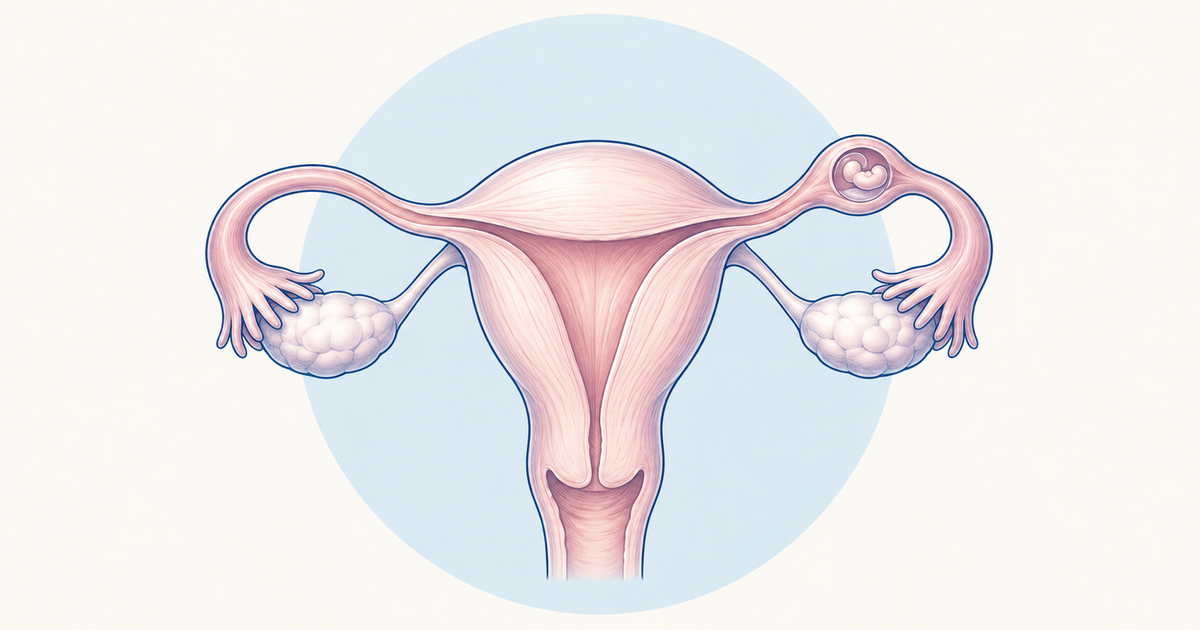
An ectopic pregnancy develops fully or partly outside the endometrial cavity. A 2026 Human Reproduction Update review of RCOG, ACOG, NICE, ESHRE and SMFM guidance says the diagnosis must be considered in any woman of reproductive age, and notes that most women present with only mild or moderate symptoms. Guideline figures below are quoted as summarised in the named reviews.
Key Takeaways
Tubal pregnancy makes up 95-97% of ectopic pregnancies, and the ampulla is the leading site (about 70% in a French register). The diagnosis rests on an adnexal mass on transvaginal ultrasound, not on an empty uterus alone.
A 2026 review calls the hCG discriminatory zone (1,500 IU/L on transvaginal scan) "fundamentally flawed": no hCG cut-off excludes a viable intrauterine pregnancy.
A viable intrauterine pregnancy should show a minimum 48-hour hCG rise of 49%, 40% or 33% when the starting level is under 1,500, 1,500-3,000 or over 3,000 mIU/mL.
Methotrexate (50 mg/m² IM) suits a stable woman with no cardiac activity in the ectopic, hCG under 5,000 and a small mass. hCG is checked on days 1, 4 and 7, and a fall of at least 15% from day 4 to day 7 is the response.
Instability or rupture means surgery, with salpingectomy the standard operation. UK guidance suggests anti-D for Rhesus-negative women.
Ectopic Pregnancy Sites and Their Frequencies
The tube is the site in 95-97% of ectopic pregnancies, and each other type accounts for roughly 1-2%, with cervical and rudimentary-horn pregnancies rarer still (2026 review). The figures below come from the Bouyer population-based study of 1,800 surgically treated cases in the Auvergne region of France (1992-2001), so read them as approximate proportions from one French register.
| Site | Share of cases |
|---|---|
| Ampulla | about 70% |
| Isthmus | 12.0% |
| Fimbria | 11.1% |
| Ovary | 3.2% |
| Interstitial | 2.4% |
| Abdomen | 1.3% |
| Cervix | none recorded |
Fimbrial and ampullary pregnancies can only be told apart at surgery. ESHRE (2020) terminology prefers "interstitial" to "cornual" because "cornual" was used inconsistently.
Risk Factors for Ectopic Pregnancy
Tubal damage is the common thread, yet roughly half of ectopic pregnancies have no identifiable risk factor (American Family Physician 2020, relaying ACOG). The 2026 review lists:
- Previous ectopic pregnancy, the strongest factor: recurrence after one tubal ectopic is 5-19%, up to a 10-fold rise (odds ratio 8.17 in a German study of 100,197 patients).
- Tubal damage from infection, endometriosis, pelvic surgery or smoking, plus subfertility and older age. A positive chlamydia test raised risk by 30% in a Danish cohort.
- IUCD: a pregnancy that occurs despite an IUCD is significantly more likely to be ectopic.
- Assisted reproduction: UK incidence after ART was 1.4% (2000-2012), and US data show 1.6% with one embryo transferred versus 2.5% with four or more.
How Ectopic Pregnancy Presents and What It Mimics
The classic triad is amenorrhoea, abdominal or pelvic pain and vaginal bleeding, but the full triad is uncommon. It was present in 40.3% of 72 cases in a single-centre Pondicherry series, and an ultrasound review found the classic clinical findings in only about 30% of presentations. The full triad is therefore present in fewer than half of cases in these reports, and a woman missing one or two of the three still needs an ectopic pregnancy considered.
Pain tends to be colicky and unilateral, then generalised after rupture. Shoulder pain, syncope, diarrhoea and rectal pressure can occur, and hypotension with tachycardia points to rupture (AFP 2020). Abnormal vital signs without obvious external bleeding suggest a large intraperitoneal bleed and need immediate escalation (2026 review); the haemorrhagic shock classification shows how vital signs change with blood loss.
The AFP differential list is appendicitis, early pregnancy loss, ovarian torsion, pelvic inflammatory disease, subchorionic haemorrhage, trauma and urinary calculi. The types of abortion post sorts early pregnancy loss by cervical status.
Ultrasound Findings in Ectopic Pregnancy
Transvaginal ultrasound (TVUS) is the essential first-line test and is operator dependent. Expert units identify 74-83% of extrauterine ectopic pregnancies on the first scan (2026 review). Diagnose by finding an adnexal mass, not by an empty uterus alone (ultrasound review).
| Finding | What to look for |
|---|---|
| Blob sign | Inhomogeneous adnexal mass moving separately from the ovary; about 60% of ectopics in one review |
| Bagel sign | Hyperechoic ring in the adnexa; about 20% of ectopics in one review |
| Corpus luteum | Same side as a tubal ectopic in about 7 of 10 cases |
| Pseudosac versus true sac | A pseudosac follows the cavity contour with a single layer of tissue; a true sac is eccentric with an echogenic ring |
| Free fluid | Echogenic fluid in the pouch of Douglas is mild haemoperitoneum, clots make it moderate, and clots with echogenic fluid in the uterovesical fold make it severe. Fluid in Morison's pouch also means severe (over 670 mL supine) |
| Interstitial line | Pathognomonic for a complete interstitial pregnancy: a line between the sac and the lateral uterine cavity |
ESHRE terminology calls an adnexal gestation sac a tubal ring (2026 review). The right upper quadrant window of a FAST scan is a point-of-care way to look for Morison's pouch fluid. An intrauterine pregnancy on TVUS essentially rules out an ectopic pregnancy, except for the very rare heterotopic pregnancy (AFP 2020). A live ectopic pregnancy needs no biochemical work-up, because surgery is indicated.
Beta-hCG in Ectopic Pregnancy: Discriminatory Zone, Rise and PUL
The discriminatory zone and why it fell out of favour
The discriminatory zone is the hCG level above which a normally sited pregnancy should be visible: over 1,500 IU/L on transvaginal scan or over 6,500 IU/L on transabdominal scan. An empty uterus above that level was read as ectopic. A 2020 AFP summary of ACOG advice already loosened it, noting that the older 1,000-2,000 mIU/mL zone can miss some intrauterine pregnancies and that a level up to 3,500 mIU/mL can be used for a desired pregnancy.
The 2026 review calls the concept "fundamentally flawed". An ectopic pregnancy can occur at any hCG level, most present below 1,500 IU/L, and false positives follow miscarriage, early multiple pregnancy and large fibroid uteri. No hCG cut-off safely excludes a potentially viable intrauterine pregnancy.
So what should you do with the 1,500 figure? Learn it as history, and apply the modern rule: do not diagnose or treat ectopic pregnancy on hCG or progesterone alone without ultrasound localisation, and do not treat a stable patient until the location is confirmed.
Serial hCG and the minimum 48-hour rise
The table shows the minimum 48-hour rise expected in a viable intrauterine pregnancy, as listed in AFP 2020 from ACOG.
| Initial hCG (mIU/mL) | Minimum rise over 48 hours |
|---|---|
| Under 1,500 | 49% |
| 1,500-3,000 | 40% |
| Over 3,000 | 33% |
Memory aid: the required rise shrinks as the starting level grows (49, 40, 33). A fall of 21% or more over 48 hours suggests a failing intrauterine pregnancy, while a smaller fall raises concern for ectopic pregnancy. The 2026 review adds that 10-20% of ectopic pregnancies show a normal-looking rise, so serial hCG cannot reliably separate normal from abnormal location on its own.
Pregnancy of unknown location
A pregnancy of unknown location (PUL) is a positive pregnancy test with no intrauterine or ectopic pregnancy on TVUS. It is a descriptive label, and about 10% of PULs are later confirmed as ectopic (ultrasound review). The share of PULs ranges from 7% to 47% between units, depending on scan quality (2026 review).
Choosing Expectant, Medical or Surgical Treatment for Ectopic Pregnancy
Start with stability
Surgery is imperative with significant blood loss, and salpingectomy, preferably laparoscopic, is first line in any haemodynamically unstable patient (2026 review). AFP lists the triggers for urgent surgical referral as instability, peritoneal signs, an embryo with cardiac activity outside the uterus and substantial cul-de-sac fluid.
Expectant management
Expectant management suits asymptomatic or mildly symptomatic women with a small, non-live pregnancy and a plateauing or falling hCG (RCOG 2016, ACOG 2018). About 31-40% of tubal ectopic pregnancies resolve without intervention.
The same review relays NICE (2023): offer it to a stable woman when the ectopic is under 35 mm, there is no live embryo and hCG is under 1,000 IU/L, and consider it at 1,000-1,500 IU/L. The review adds that a sustained rise in hCG, or a level above 2,000 IU/L, is a reason to stop expectant management. Monitoring continues until hCG falls below 15 IU/L (methotrexate cohort paper).
Methotrexate for Ectopic Pregnancy: Criteria, Regimen and Counselling
Methotrexate is a folate antagonist, and it is toxic to a viable intrauterine pregnancy, so that must be excluded before any dose (2026 review).
Methotrexate criteria
UK, Irish, Canadian and US guidance asks for a small pregnancy, no live embryo and hCG under 5,000 IU/L (2026 review). A review built on ACOG guidance adds an ectopic under 35 mm, haemodynamic stability, no contraindication and reliable follow-up, with about 95% efficacy when met. NICE NG126 ties the first-line choice to hCG:
| hCG (IU/L) | NICE NG126 advice |
|---|---|
| Under 1,500 | Methotrexate first line if suitable and able to return for follow-up |
| 1,500 to under 5,000 | Choice of methotrexate or surgery |
| 5,000 or more | Surgery first line |
Surgery is also first line for a mass of 35 mm or more, a visible heartbeat, significant pain or inability to return for follow-up. Success is highest below 1,000 mIU/mL (98%) and lowest from 5,000 upward (85% and 81%), though the middle bands are not strictly ordered, as these AFP 2020 figures relayed from ACOG show:
| Initial hCG (mIU/mL) | Methotrexate success |
|---|---|
| Under 1,000 | 98% |
| 1,000-1,999 | 94% |
| 2,000-4,999 | 96% |
| 5,000-9,999 | 85% |
| 10,000 or more | 81% |
When methotrexate is avoided
Methotrexate is avoided, or surgery favoured, in these situations (ACOG-based review and AFP 2020):
- Intrauterine pregnancy, or cardiac activity in the ectopic
- Ruptured ectopic or haemodynamic instability
- Immunodeficiency, moderate to severe cytopenias, or renal or hepatic disease
- Alcoholism, active pulmonary disease or peptic ulcer disease
- Breastfeeding or methotrexate hypersensitivity
- Refusal of blood transfusion or inability to attend follow-up
- A high initial hCG (AFP: above 5,000 to 10,000 mIU/mL, a reason to refer for surgery)
- An ectopic over 4 cm
Regimen and monitoring
All regimens use 50 mg/m² IM, after a baseline CBC and CMP. The single-dose protocol (AFP 2020; 2026 review) runs as follows:
- Day 1: hCG, then the dose.
- Day 4: hCG. A rise from day 1 to day 4 is normal.
- Day 7: hCG. A fall of at least 15% from day 4 is the response, so the day 7 value divided by the day 4 value is 0.85 or lower.
- If the fall is under 15%, offer a second dose or surgery; no decline after two doses means surgery.
- After an adequate fall, check hCG weekly until it is undetectable (below 15 IU/L in the 2026 review).
The two-dose protocol gives doses on days 1 and 4 with extra doses on days 7 and 11 only if needed. AFP suggests single-dose treatment for an initial hCG under 3,600 mIU/mL and considering two doses above that, especially over 5,000. AFP says multidose protocols carry a higher risk of adverse effects and are not preferred; they include leucovorin rescue (overview). One caution from the 2026 review: a 2024 meta-analysis found no significant benefit of methotrexate over expectant management.
Counselling after methotrexate
- Rupture risk persists until hCG is undetectable, so explain the warning signs.
- Pain 2-3 days after dosing is common and can be managed expectantly if there are no signs of rupture.
- Avoid folic acid-containing supplements and NSAIDs (they can decrease the effectiveness of methotrexate) and sun exposure (dermatitis).
- Avoid alcohol (and opioid analgesics), which can mask the symptoms of rupture, and intercourse and vigorous exercise, which increase the risk of rupture (AFP 2020; overview).
- Delay conception for at least one ovulatory cycle after hCG is undetectable (AFP); the 2026 review advises 3 months because methotrexate is teratogenic. There is no evidence that it affects future fertility.
Surgery for Ectopic Pregnancy: Salpingectomy, Salpingotomy and Rh Immunoglobulin
Salpingectomy is the standard operation when the contralateral tube is healthy (RCOG 2016, NICE 2023). Salpingotomy is broadly recommended with contralateral tubal damage, previous abdominal surgery, previous pelvic inflammatory disease or a previous ectopic pregnancy, accepting a higher risk of reintervention or recurrence (2026 review).
The ESEP randomised trial compared the two operations at 3 years in women without significant contralateral tubal pathology:
| Outcome at 3 years | Salpingotomy | Salpingectomy |
|---|---|---|
| Ongoing pregnancy | 61% | 56% |
| Persistent trophoblast | 7% | under 1% |
| Repeat ectopic pregnancy | 8% | 5% |
Only the persistent trophoblast difference was significant, and 20% of the salpingotomy group needed salpingectomy for bleeding. After salpingotomy, hCG is followed to pre-pregnancy levels, and a rise suggests residual tissue. UK guidance suggests anti-D (Rh immunoglobulin) for Rhesus-negative women, based on historical evidence of fetal cells in the maternal circulation after rupture.
Special Sites of Ectopic Pregnancy in Brief
| Site | Key points |
|---|---|
| Interstitial | About 2-4% of ectopics; rupture typically at 7-16 weeks, with heavy haemorrhage. Complete: cornuotomy plus ipsilateral salpingectomy; partial: transcervical suction |
| Ovarian | About 80% lie on the corpus luteum side; strong IUCD association (odds ratio 9.6); may present with pain alone; surgery recommended |
| Cervical | Below the internal os, classically painless bleeding; success 58% (methotrexate) to 87% (evacuation plus uterine artery embolisation). A sliding sign suggests a passing miscarriage |
| Caesarean scar | Needs a niche; about 1 in 1,800 to 1 in 2,226 pregnancies. Systemic methotrexate succeeded in 59% and is not recommended; avoid sharp curettage |
| Heterotopic | Intrauterine plus ectopic. Historically about 1 in 30,000 spontaneous pregnancies and about 1% with ART; recent UK data show 1 in 2,000 in early pregnancy units |
Interstitial figures follow a Cureus 2026 review, the caesarean scar incidence follows a 2023 classification paper, and the other rows follow the 2026 review.
Common Mistakes When Revising Ectopic Pregnancy
- Diagnosing from one hCG. A single value with a not-yet-visible pregnancy cannot label an ectopic, and no hCG excludes a viable pregnancy.
- Treating a PUL with methotrexate. Localise the pregnancy first.
- Calling a day 4 rise a failure. Response is judged on the fall from day 4 to day 7.
- Mixing "cornual" and "interstitial". Older texts use both, ESHRE prefers interstitial, and these pregnancies rupture later and bleed more.
- Stopping once an intrauterine pregnancy is seen. The adnexa still need a careful look, especially after assisted reproduction (heterotopic pregnancy).
Conclusion: Ectopic Pregnancy in Three Decisions
Ectopic pregnancy revision comes down to three decisions: where it sits (the tubal ampulla leads, found by TVUS first), what hCG adds (a trend beside the scan, not a discriminatory number), and which treatment fits (methotrexate for a stable, small, non-cardiac, low-hCG pregnancy with reliable follow-up, surgery otherwise). Draw the day 1, 4 and 7 timeline and the 49-40-33 table from memory, then try the obstetric complications practice questions.
Practise this on Reflex
Turn what you just read into recall with 14 years of tagged PYQs.
FAQ
Frequently asked questions
The questions aspirants ask most about this topic.
The fallopian tube, which accounts for 95-97% of ectopic pregnancies. Within the tube the ampulla leads: in a French population register of 1,800 surgically treated cases, about 70% were ampullary, 12.0% isthmic and 11.1% fimbrial. Ovarian (3.2%), interstitial (2.4%) and abdominal (1.3%) sites were much rarer, so treat these as approximate proportions from one register.
It is the hCG level above which a normally sited pregnancy should be visible on ultrasound: over 1,500 IU/L on transvaginal scan or over 6,500 IU/L on transabdominal scan. A 2026 Human Reproduction Update review calls the concept fundamentally flawed, because an ectopic pregnancy can occur at any hCG level and no cut-off safely excludes a potentially viable intrauterine pregnancy. hCG alone should not be used to diagnose or treat ectopic pregnancy without ultrasound localisation.
UK, Irish, Canadian and US guidance asks for a small pregnancy, no live embryo and hCG under 5,000 IU/L. A review built on ACOG guidance adds an ectopic under 35 mm, haemodynamic stability, no contraindication and reliable follow-up. NICE NG126 makes methotrexate first line when hCG is under 1,500 IU/L and the woman can return for follow-up, and offers a choice of methotrexate or surgery from 1,500 to under 5,000 IU/L.
The dose is 50 mg/m2 intramuscularly on day 1, with hCG measured on days 1, 4 and 7. A rise from day 1 to day 4 is normal, and a fall of at least 15% from day 4 to day 7 is the response. If the fall is under 15%, a second dose or surgery is offered, and after an adequate fall hCG is checked weekly until it is undetectable.
AFP lists haemodynamic instability, peritoneal signs, an embryo with cardiac activity outside the uterus and substantial cul-de-sac fluid as triggers for urgent surgical referral. NICE NG126 also lists hCG of 5,000 IU/L or more, a mass of 35 mm or more, significant pain and inability to return for follow-up. Salpingectomy is the standard operation when the other tube is healthy, and salpingotomy is considered with contralateral tubal damage, previous abdominal surgery, previous pelvic inflammatory disease or a previous ectopic pregnancy.
UK guidance (RCOG 2016, as summarised in a 2026 review) suggests giving anti-D (Rh immunoglobulin) to Rhesus-negative women. The reasoning is historical evidence of fetal cells in the maternal circulation after a ruptured tubal ectopic pregnancy.
Stay ahead in your preparation
Get expert tips, exam updates, and high-yield insights delivered straight to your inbox.
No spam. Unsubscribe anytime.
More in Obstetrics & Gynaecology
View all → Obstetrics & Gynaecology
Bishop Score for NEET PG: The Five Components, the Favourable Cervix and What the Score Decides
The Bishop score rates the cervix on five features to predict whether induction of labour will work. Learn the point table, the simplified version, the cut-offs and how the score steers cervical ripening.
 Obstetrics & Gynaecology
Placenta Previa vs Abruptio Placentae for NEET PG: The Painless vs Painful Bleeding Table
Placenta previa causes painless bleeding with a soft uterus. Abruptio placentae causes painful bleeding with a tender, hypertonic uterus. Here is the full NEET PG comparison.
 Obstetrics & Gynaecology
Partograph for NEET PG: What the Alert Line and Action Line Actually Mean
 Obstetrics & Gynaecology