Murmur Grading for NEET PG: The Levine Scale, and Why Louder Doesn't Always Mean Worse
By Dr. Utsav Bhattacherjee, MBBS, MBA · 2 Sept 2026 · 7 min read
Last updated: 23 Sept 2026
On this page
Murmur grading questions are really testing one thing: whether you know that a palpable thrill is the dividing line between grade 3 and grade 4, and that grade matters far less on its own than what it tells you about the underlying lesion. The Levine scale itself is simple to memorize — the exam value is in what you do with it.
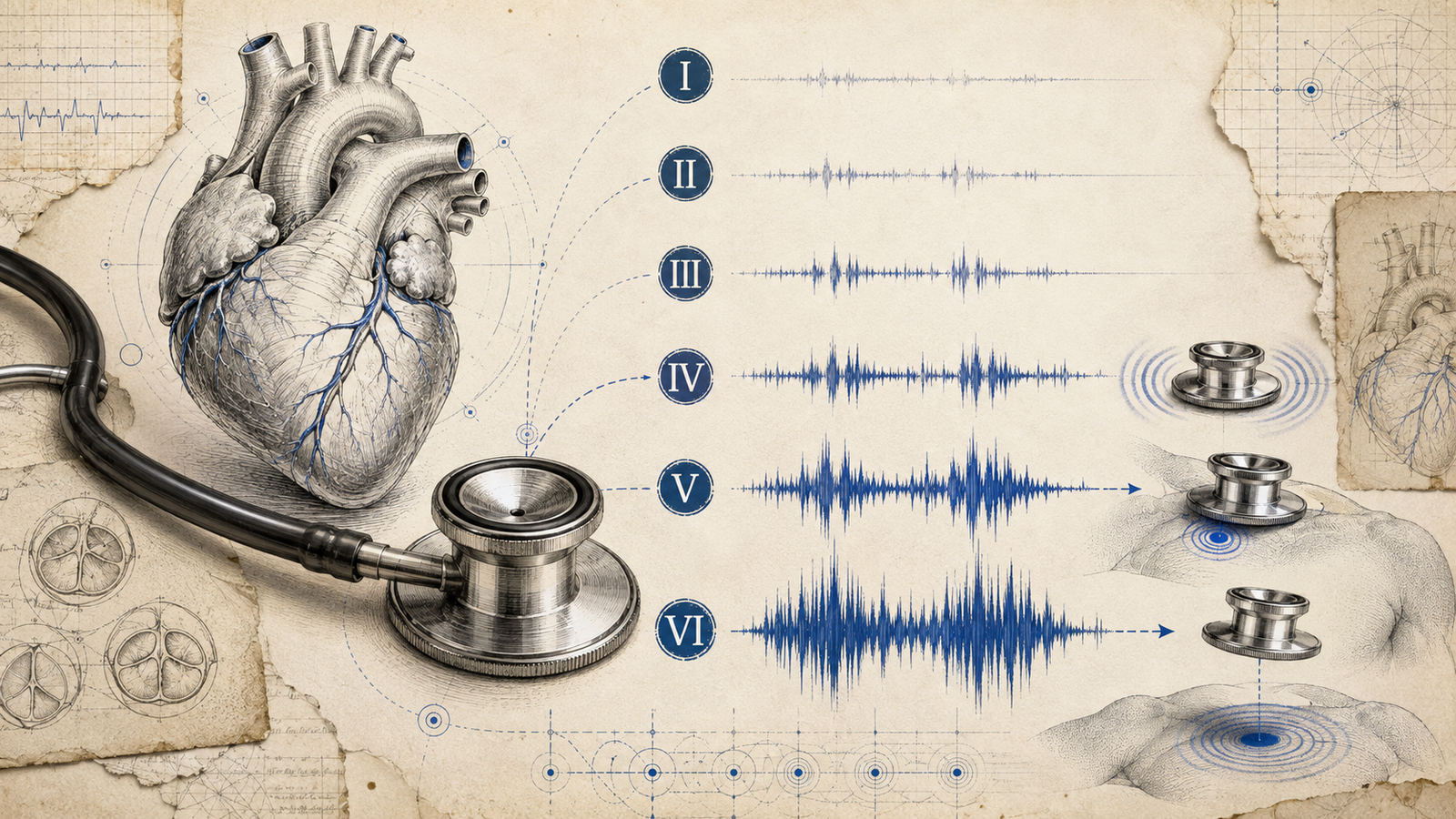
The Levine Scale: Grades 1 Through 6
| Grade | Description |
|---|---|
| 1 | Very faint, heard only with careful auscultation and effort |
| 2 | Faint, but heard immediately on placing the stethoscope |
| 3 | Moderately loud, no palpable thrill |
| 4 | Loud, with a palpable thrill |
| 5 | Very loud, thrill present, audible with the stethoscope only partly touching the chest |
| 6 | Loudest, thrill present, audible with the stethoscope just off the chest wall |
The single detail worth over-learning: a palpable thrill appears starting at grade 4. If a vignette mentions a palpable thrill on examination, the murmur being described is grade 4 or higher — full stop. This is the fact examiners test most often, because it's precise, unambiguous, and easy to write a question around.
Why Grade Alone Is a Trap
The intuitive assumption — louder murmur means worse disease — is often wrong, and this is exactly where NEET PG likes to test the exception rather than the rule. In critical aortic stenosis, for example, the murmur can paradoxically become softer as the valve narrows further and cardiac output falls — less blood is crossing the valve per unit time, so there's less turbulence to generate sound, even though the underlying disease is more severe than a louder murmur earlier in the disease course. A question describing severe symptoms alongside a surprisingly soft murmur is testing exactly this.
Grade also doesn't tell you which valve or which lesion — it's purely a measure of intensity, layered on top of the murmur's timing, location, character, and radiation, which are what actually point to a diagnosis. Grade is the detail you report last, not the one you diagnose from.
Innocent vs Pathological: What Grade Suggests, Without Confirming
Innocent (functional) murmurs — common in children and young adults, with no structural heart disease — are almost always grade 1 or 2. A grade 4 or higher murmur, by contrast, is essentially never innocent — the presence of a thrill alone is enough to warrant further workup regardless of the patient's age or symptom status.
This is a suggestive pattern, not a diagnostic rule. A grade 3 murmur can be either innocent or pathological — grade alone doesn't settle it at that level, which is exactly why questions rarely test grade 3 as the deciding detail and instead lean on grade 1–2 (suggestive of innocent) or grade 4+ (essentially rules out innocent) as the clean, testable extremes.
How Grading Fits Into a Full Murmur Description
- A complete murmur description on the exam — and in real auscultation — covers timing (systolic vs diastolic), location, radiation, character, and grade, in that order of diagnostic weight. Grade is usually the last detail given in a vignette, functioning as a modifier on a murmur you've likely already identified from the other four features, rather than as the primary clue.
- Timing and location typically narrow the diagnosis to one or two valves; grade then tells you about severity or the presence of a thrill, which can carry management implications (thrill often prompts more urgent echocardiographic evaluation) even without changing the underlying diagnosis.
For the same pattern-to-diagnosis approach applied to lab values rather than auscultation, see our guide to anemia classification, and for how much of the paper Medicine carries overall, our subject-wise weightage breakdown.
Practise this on Reflex
Turn what you just read into recall with 14 years of tagged PYQs.
FAQ
Frequently asked questions
The questions aspirants ask most about this topic.
Grade 4 and above. A palpable thrill is the defining feature that separates grade 3 (no thrill) from grade 4 (thrill present) on the Levine scale.
Yes — critical aortic stenosis is the classic example. As the valve narrows further and cardiac output falls, reduced flow can paradoxically make the murmur softer, even as the disease worsens.
Grade 1 or 2. Innocent murmurs are common in children and young adults with structurally normal hearts, and are almost always soft. A grade 4 or higher murmur is essentially never innocent.
No. Grade is purely a measure of intensity. Timing, location, radiation, and character are what point to the specific valve and lesion.
About the author
Stay ahead in your preparation
Get expert tips, exam updates, and high-yield insights delivered straight to your inbox.
No spam. Unsubscribe anytime.
More in Medicine
View all → Medicine
Nephrotic Syndrome vs Nephritic Syndrome: The Proteinuria Threshold That Explains Everything Else
 Medicine
Anemia Classification for NEET PG: Morphological Types, Iron Studies, and the Differentials Examiners Actually Test
Anemia questions cut across Medicine, Pathology, Pediatrics and Obstetrics, and most of them hand you a hemogram and expect you to name the type on sight. The morphological classification, the iron studies table, and the smear clues that separate the differentials.
 Medicine
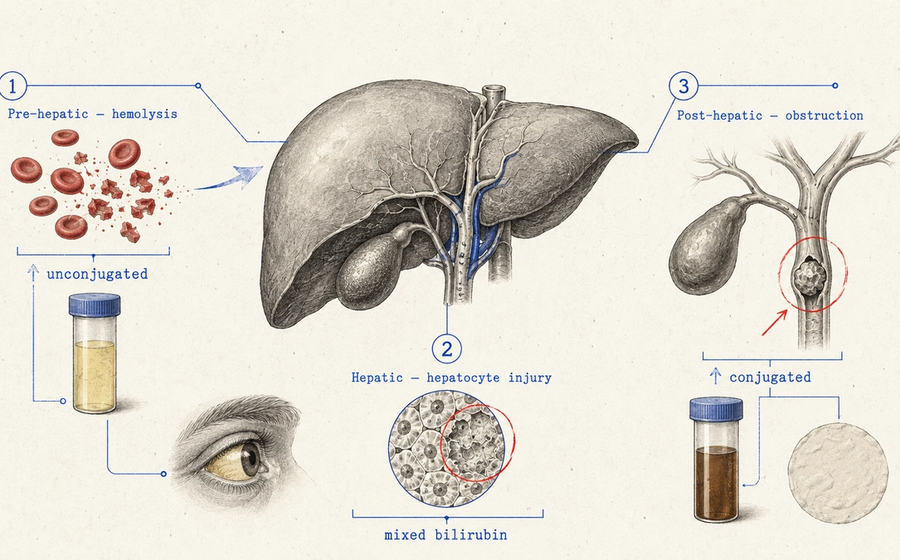
Jaundice Types for NEET PG: Pre-Hepatic, Hepatic, and Post-Hepatic Classification
Jaundice classification for NEET PG — pre-hepatic, hepatic, and post-hepatic types, the lab pattern that tells them apart, and Courvoisier's law explained.
 Medicine
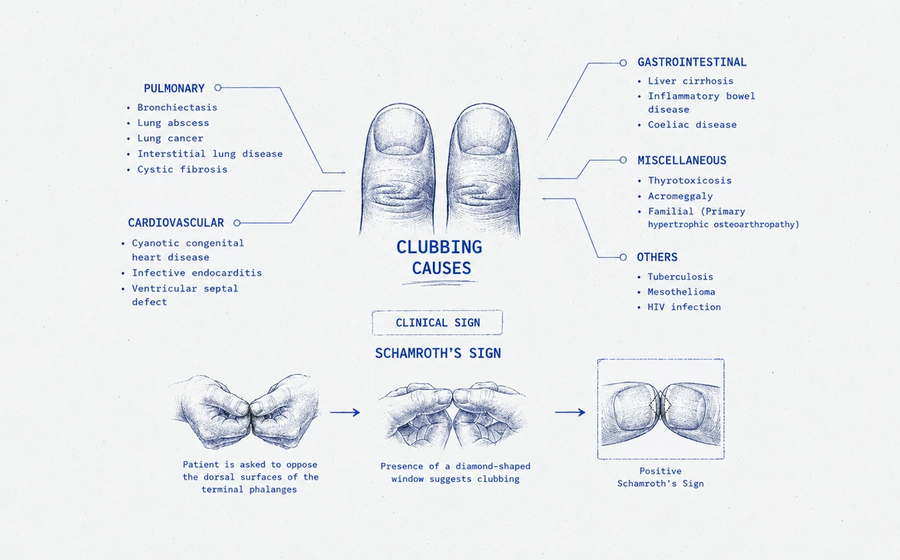
Clubbing Causes for NEET PG: Grades, Schamroth’s Sign, and the Full List
The four grades, Schamroth’s window test, and the complete pulmonary, cardiac and GI cause list.